Videonystagmography (VNG) Testing in Queens & Long Island
The Objective Test for Why You Are Dizzy - Moving the Diagnosis from Guess to Evidence
Dizziness is one of the most common and most difficult symptoms to diagnose accurately. Patients use the word "dizzy" to describe sensations ranging from true rotational vertigo and unsteadiness to lightheadedness and brain fog - each pointing to a different underlying cause. Without objective testing, clinicians are working from symptoms and clinical signs alone, and the risk of misdiagnosis - and therefore mistreatment - is high.
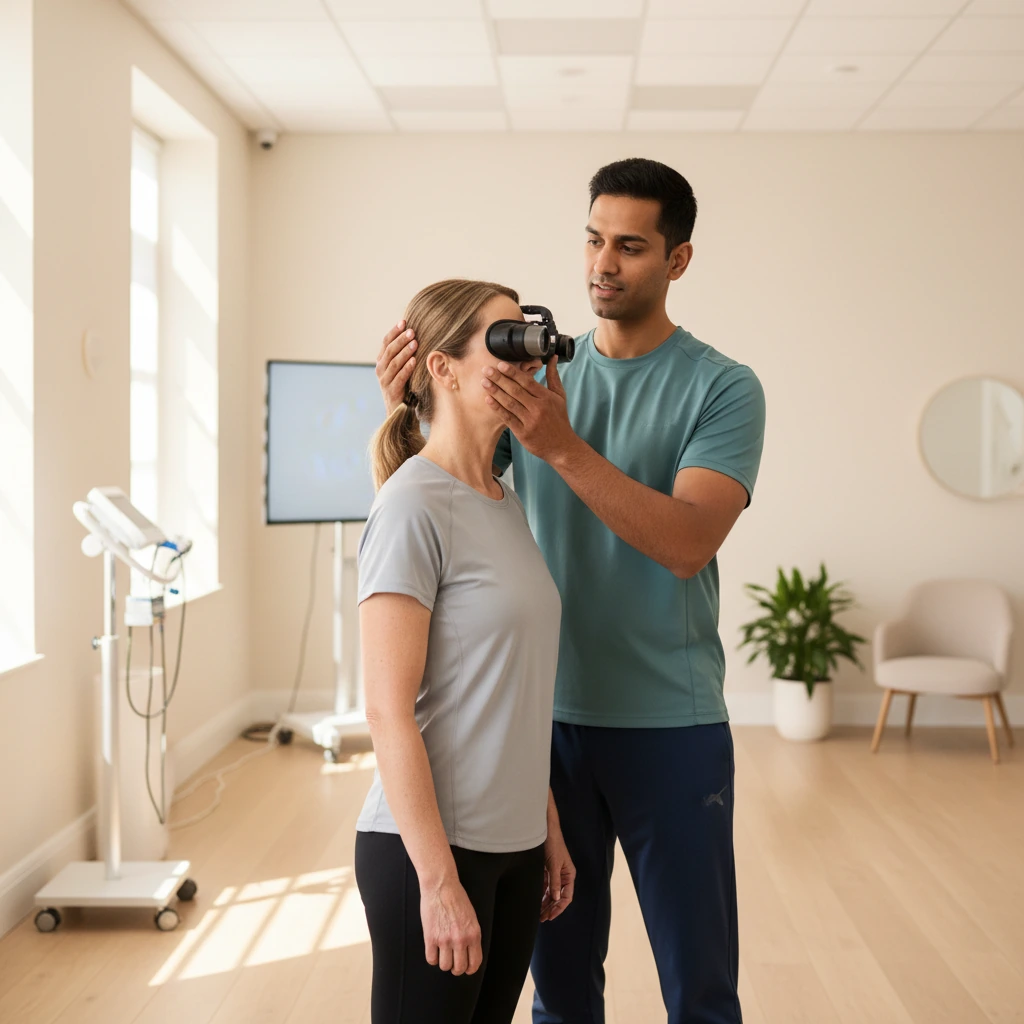
Videonystagmography (VNG) is the gold-standard vestibular diagnostic test. By recording and analysing your eye movements - specifically the involuntary movements called nystagmus - using infrared video goggles, VNG provides objective, machine-generated evidence about the functional status of your vestibular system. At Dynamic Physical Therapy, VNG testing is performed in-clinic and integrated directly with vestibular rehabilitation - so the diagnosis informs the treatment in the same clinical visit, using the precision that objective testing provides.
Nystagmus - the Eye Movement That Reveals What the Vestibular System Is Doing
Nystagmus is a pattern of involuntary eye movement - characterised by a slow drift of the eyes in one direction followed by a rapid corrective movement back. It is the eye's response to a vestibular signal that tells the brain the head is moving, even when it is not. In a healthy vestibular system, nystagmus is brief and appropriate to actual head movement. When the vestibular system is dysfunctional, nystagmus appears when it should not, or fails to appear when it should - and the specific pattern of nystagmus produced provides a precise diagnostic fingerprint of the underlying pathology.
The vestibulo-ocular reflex (VOR) - the reflex that keeps your vision stable during head movement by driving compensatory eye movements - is the physiological system VNG tests. When the VOR is functioning correctly, it generates eye movements that are equal and opposite to head movements, keeping the visual world stable. When one inner ear is malfunctioning, the VOR is asymmetric - one side drives less eye movement than the other - and nystagmus results as the eyes try to compensate for the asymmetry.
The Slow Phase
The vestibular system drives the slow component of nystagmus - the drift that reflects the underlying vestibular asymmetry. The direction and speed of this slow phase directly indicates which vestibular organ is generating the abnormal signal and at what magnitude.
The Fast Phase (Corrective Saccade)
The rapid corrective component of nystagmus is generated by the brain - it is the brain's attempt to reset eye position after the slow vestibular drift. Clinical convention names the direction of nystagmus by the direction of this fast phase, because it is more clinically visible. Understanding that the pathological signal is in the slow phase is essential to interpreting VNG results correctly.
Why Infrared Video Goggles
Normal light allows visual fixation - the ability to voluntarily suppress vestibular nystagmus by focusing on a stable target. This fixation suppression masks underlying vestibular pathology. The infrared goggles used in VNG eliminate visual fixation by placing the patient in complete darkness, preventing voluntary suppression of nystagmus and revealing the true underlying vestibular signal. This is why VNG produces more accurate results than older direct observation methods.
Objective Measurement
The infrared cameras in the VNG goggles record eye position hundreds of times per second - generating quantitative data on nystagmus direction, speed (slow-phase velocity), latency, and duration. This objective, numerical data is compared to population norms to determine whether the vestibular system is functioning within or outside of normal limits - replacing subjective clinical judgement with objective measurement.
The Three Components of the VNG Test Battery
VNG is not a single test - it is a battery of three related but distinct sub-tests, each interrogating a different aspect of vestibular and oculomotor function. Together they provide a comprehensive picture of vestibular system integrity that no single test could achieve alone.
Oculomotor (Ocular Motor) Testing
Assesses the accuracy and smoothness of eye movements in response to visual stimuli - testing the neurological pathways that control eye movement independently of the vestibular system. Patients follow moving targets, look between points (saccades), and maintain gaze while following a slowly moving target (smooth pursuit). Abnormalities in oculomotor testing suggest central nervous system involvement - cerebellar or brainstem pathology - rather than peripheral inner ear pathology. This distinction is clinically critical: it helps identify patients whose dizziness requires neurological referral rather than vestibular rehabilitation.
Positional & Positioning Testing
Assesses whether specific head positions or head movements trigger nystagmus and vertigo - the defining feature of positional vestibular disorders. Positioning testing includes the Dix-Hallpike manoeuvre (the gold-standard diagnostic test for BPPV affecting the posterior semicircular canal) and the supine roll test (for horizontal canal BPPV). The VNG goggles record the nystagmus response during and after each positional change, characterising its direction, latency, duration, and fatigueability - the specific combination of these features determines which canal and which ear is affected, and therefore which canalith repositioning manoeuvre is required. Positional testing identifies sustained position-dependent nystagmus that may indicate a different diagnosis from BPPV.
Caloric Testing
The only VNG sub-test that assesses each ear independently - providing the quantitative comparison of right versus left peripheral vestibular function that is the cornerstone of unilateral vestibular hypofunction diagnosis. Warm and cool air or water is gently irrigated into each ear canal, one at a time. The temperature change creates a convection current in the endolymph of the horizontal semicircular canal, mimicking a slow head movement and generating nystagmus. The slow-phase velocity of the resulting nystagmus from each ear is compared - a significant asymmetry (unilateral weakness greater than 25% by convention) confirms peripheral vestibular hypofunction on the weaker side. Canal paresis and directional preponderance are calculated from the four caloric irrigations and directly inform the vestibular rehabilitation program.
Peripheral vs. Central Vestibular Disorders - The Most Important Clinical Question VNG Answers
The most clinically significant finding from VNG is whether the vestibular dysfunction is peripheral (inner ear origin) or central (brain/brainstem origin). This distinction determines the treatment pathway - vestibular rehabilitation for peripheral disorders, urgent neurological referral for central ones.
Peripheral Vestibular Disorder
Inner ear pathology - the labyrinth, semicircular canals, otolith organs, or vestibular nerve
Central Vestibular Disorder
Brain or brainstem pathology - cerebellum, brainstem vestibular nuclei, or central connections
Symptoms and Situations That Warrant VNG Testing
VNG is indicated whenever the cause of dizziness, vertigo, or balance impairment needs to be objectively confirmed - rather than assumed from symptoms alone, which are often non-specific and can point to multiple different diagnoses.
Vestibular & Balance Conditions Identified with VNG at Dynamic PT
BPPV (All Canal Types)
Vestibular Neuritis
Meniere's Disease
Labyrinthitis
Unilateral Vestibular Hypofunction
Post-Traumatic Vestibular Disorders
Central Vestibular Pathology
Acoustic Neuroma (Screening)
Superior Canal Dehiscence
Age-Related Vestibular Decline
Vestibular Migraine
Bilateral Vestibular Hypofunction
What to Expect During VNG Testing at Dynamic PT
Preparation - 48 Hours Before Testing
VNG results can be significantly affected by medications and substances. For 48 hours before your test, avoid: vestibular suppressants (meclizine, diazepam), sedatives or tranquillisers, antihistamines (Benadryl), alcohol, and caffeinated beverages. Continue all other medications unless specifically instructed otherwise. No food for 4 hours before the test - nausea from the caloric component is more manageable on an empty stomach. Wear comfortable clothing and arrange transport in case dizziness persists after caloric testing.
Goggle Fitting & Baseline Recording
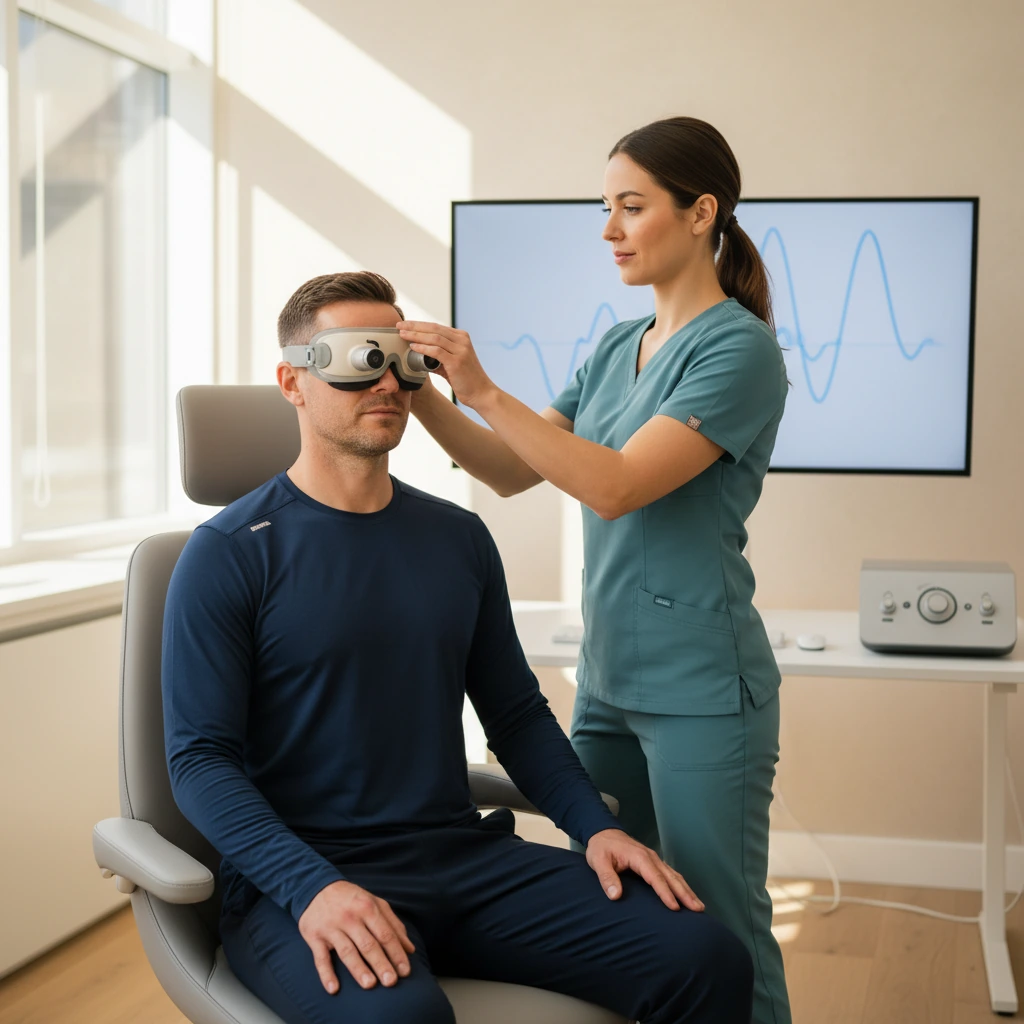
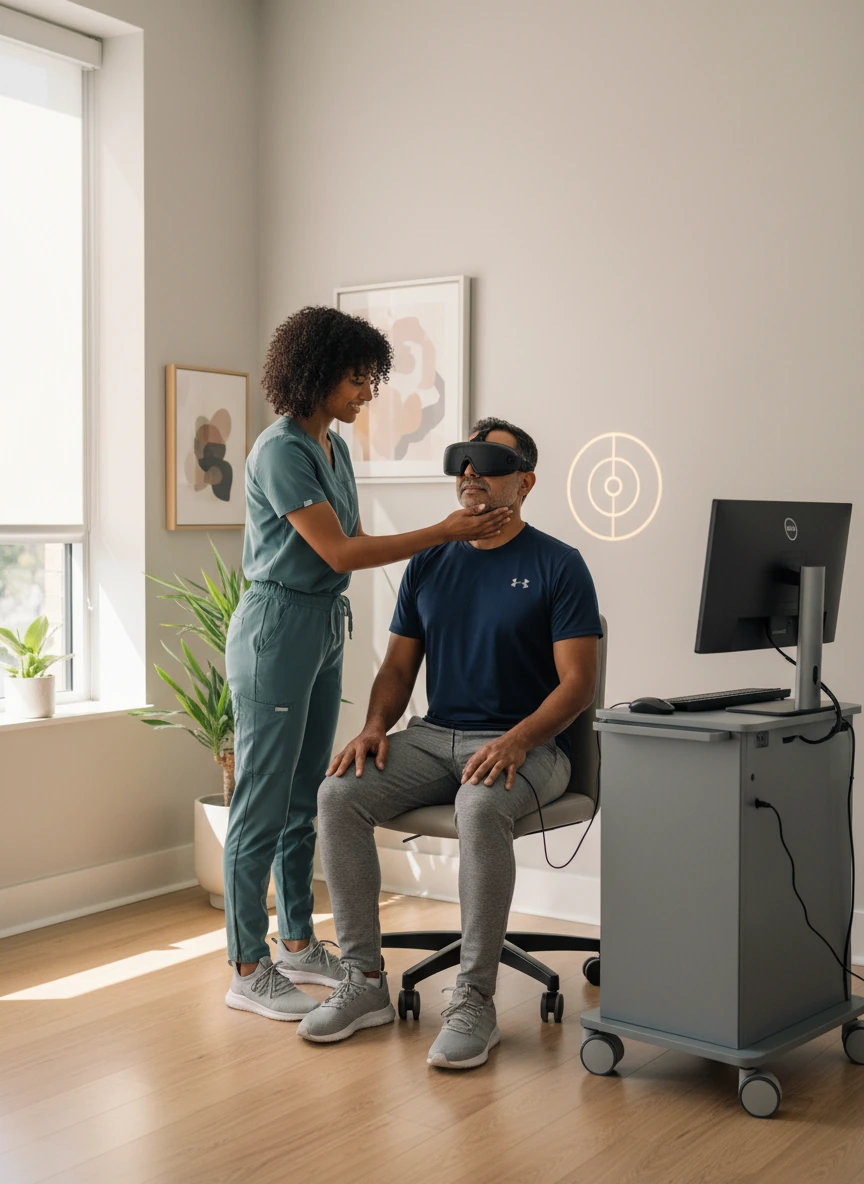
You are seated and fitted with the infrared video goggles - a lightweight headset that looks similar to large ski goggles. The cameras inside the goggles track your eye position in complete darkness, eliminating the visual fixation suppression that would mask underlying nystagmus. A baseline recording of spontaneous eye movements is taken before any specific testing begins.
Oculomotor Testing - 15 - 20 Minutes
You follow moving visual targets displayed inside the goggles - tracking a moving light, making rapid jumps between two points, and following a smoothly moving target. This component is entirely comfortable with no vertigo produced. The recorded eye movements are analysed for the accuracy and smoothness of oculomotor function, screening for central pathology before vestibular testing begins.
Positional & Positioning Testing - 15 - 20 Minutes
Your head and body are moved into a series of positions while the goggles record your eye movements - including the Dix-Hallpike manoeuvre and the supine roll test. Some of these positions may trigger your usual vertigo and nausea - this is expected and indicates a positive finding. The vertigo settles quickly, and the objective recording of the nystagmus it produces provides the diagnostic information. Your therapist guides you through each position and explains what the response indicates.
Caloric Testing & Results - 20 - 30 Minutes
You lie supine with your head elevated 30° (placing the horizontal canal in the optimal position for caloric testing). Warm then cool air or water is gently directed into each ear canal, one at a time, for approximately 30 - 60 seconds. Each irrigation produces a brief period of dizziness and nystagmus that is recorded by the goggles. Four irrigations total - warm and cool in each ear. After all four, the slow-phase velocities are compared to calculate unilateral weakness percentage and directional preponderance. Results are reviewed with you immediately and integrated into your vestibular rehabilitation plan.
What VNG Testing Achieves for Your Vestibular Care
Confirms the Correct Diagnosis
Without objective testing, the differential diagnosis of dizziness includes dozens of conditions. VNG systematically rules in or out the most clinically significant vestibular disorders and identifies the specific type, side, and canal involved - precision that shapes every subsequent treatment decision.
Identifies Red Flags for Referral
Central vestibular pathology - brainstem stroke, cerebellar tumour, multiple sclerosis - can present identically to benign peripheral disorders on clinical examination alone. VNG oculomotor testing reliably identifies the central features that require urgent neurology referral, ensuring patients with serious pathology are escalated appropriately.
Directs Vestibular Rehabilitation
Vestibular rehabilitation is most effective when matched to the specific diagnosis. VNG caloric data quantifies the degree of unilateral weakness, informing the intensity of adaptation exercises. Positional test results identify the specific canal and side involved in BPPV, selecting the correct repositioning manoeuvre. VNG transforms the rehabilitation from generic balance training to targeted neuroplastic intervention.
Objective Medico-Legal Documentation
For MVA patients, workers' compensation claims, and disability assessments involving vestibular complaints, VNG provides objective, reproducible, machine-generated evidence of vestibular dysfunction that clinical examination alone cannot supply. The quantitative unilateral weakness percentage is the standard documentation requirement for vestibular injury claims.
VNG Testing FAQs
Is the VNG test painful?
VNG testing is not painful. The oculomotor component is completely comfortable - you simply follow visual stimuli with your eyes while wearing the goggles. The positional component may trigger your familiar vertigo and nausea during the Dix-Hallpike or roll tests - this is expected, indicates a positive finding, and settles within seconds to a minute as the nystagmus fatigues. The caloric component produces the most significant dizziness - each warm and cool irrigation generates a brief period of nausea and the sensation of spinning, lasting approximately 1 - 2 minutes before subsiding. Some patients find caloric testing quite uncomfortable during those 1 - 2 minutes; others find it mild. It is consistently well tolerated with appropriate preparation and clinical support.
Why do I have to avoid medications before the test?
The medications most commonly prescribed for dizziness - meclizine, diazepam, antihistamines - are vestibular suppressants. Their mechanism of action is to reduce the sensitivity of the vestibular system and suppress nystagmus. When these medications are active in the system during VNG testing, they suppress the nystagmus that VNG is designed to detect and measure - producing false-negative results that suggest normal vestibular function when a genuine pathology is present. Similarly, alcohol and sedatives suppress nystagmus through CNS depression. Avoiding these substances for 48 hours before testing ensures the vestibular system is in its natural state and the VNG results reflect your true vestibular function, not the pharmacological suppression of it.
I've had BPPV before and the Epley manoeuvre helped. Do I still need VNG?
The Epley manoeuvre is the treatment for posterior canal BPPV - the most common type. If the diagnosis is straightforward and the Epley is effective, VNG may not be necessary. However, VNG becomes important in several scenarios: if the Epley is not resolving symptoms after 2 - 3 attempts (suggesting a different canal, side, or diagnosis), if the nystagmus pattern on the Dix-Hallpike is atypical, if BPPV is recurring frequently (which warrants investigation of an underlying cause), or if the presentation has features that raise the possibility of central pathology. VNG also identifies horizontal canal BPPV - a less common but distinct type requiring a different treatment manoeuvre (the Barbecue Roll or Gufoni manoeuvre) - which clinical examination alone sometimes misses.
How does VNG testing lead to vestibular rehabilitation?
VNG findings directly prescribe the vestibular rehabilitation program. For BPPV confirmed by positional testing: the specific canalith repositioning manoeuvre for the affected canal and side is performed immediately at the same visit - in some cases resolving the condition in a single session. For unilateral vestibular hypofunction confirmed by caloric testing: the degree of asymmetric function (unilateral weakness percentage) determines the starting intensity of adaptation and habituation exercises, which retrain the VOR and brainstem compensation mechanisms. For bilateral vestibular hypofunction: a different rehabilitation approach focusing on sensory substitution is prescribed. Without VNG, vestibular rehabilitation is applied to an assumed diagnosis - with VNG, it is applied to a confirmed, quantified diagnosis.
Is VNG testing covered by insurance?
VNG testing is covered by Medicare, Medicaid, Workers' Compensation, No-Fault, and most commercial insurance plans when medically indicated for evaluation of dizziness, vertigo, or balance disorders - billed under vestibular function testing procedure codes. No-Fault insurance (motor vehicle accidents) routinely covers VNG for post-traumatic dizziness and vertigo, where objective documentation of vestibular dysfunction is a standard requirement for the clinical and medico-legal record. At Dynamic Physical Therapy, we verify your specific coverage before your appointment. Call (718) 826-3200 and our team will confirm your benefits.