TMJ Dysfunction Treatment in Queens & Long Island
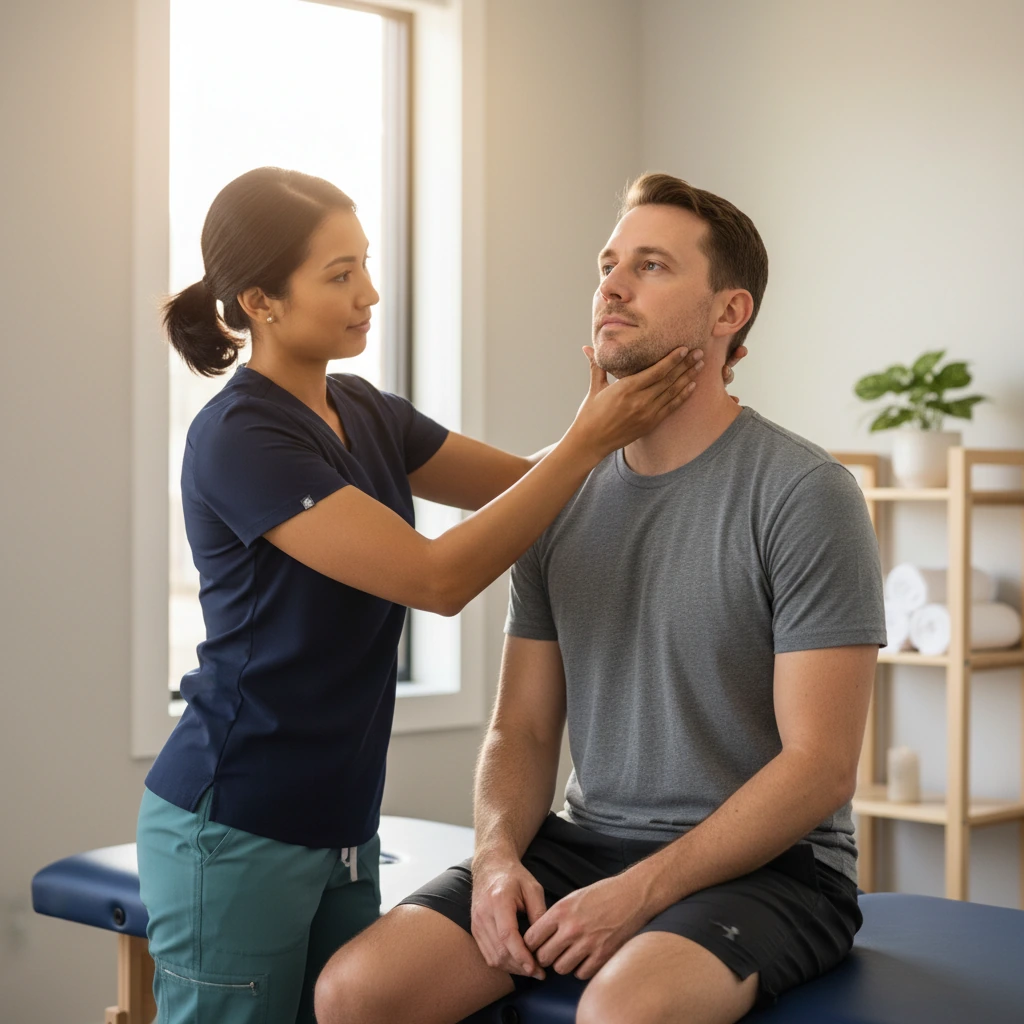
Jaw Pain, Clicking, Headaches - PT Can Treat the Source, Not Just the Symptoms
The temporomandibular joint (TMJ) is one of the most complex and frequently used joints in the body - involved in every bite, word, and yawn. When this joint or the muscles controlling it become dysfunctional, the consequences extend far beyond jaw pain: headaches, ear pain, neck stiffness, dizziness, and facial pain are all common presentations of TMJ disorder (TMD).
At Dynamic Physical Therapy, we treat TMJ dysfunction with one-on-one, hands-on precision. Our therapists are trained in craniofacial and cervical assessment - recognising the critical jaw - neck relationship that most TMD treatments overlook - and work in coordination with your dentist when indicated.
Why Your Jaw Pain May Actually Start in Your Neck
The C1 - C3 nerve roots of the cervical spine share a convergence pathway with the trigeminal nerve, which innervates the TMJ and the muscles of mastication. This means that cervical spine dysfunction can directly produce or amplify jaw pain, facial pain, and headaches.
This is why a thorough evaluation at Dynamic PT always includes the neck, shoulder girdle, and thoracic spine alongside the jaw - and why treating only the TMJ without correcting contributing cervical dysfunction so frequently produces only temporary relief.
Trigeminal-Cervical Convergence
C1 - C3 nerve afferents overlap with the trigeminal nerve - meaning upper cervical irritation can present as jaw, facial, or ear pain. Treating only one region while ignoring the other rarely resolves either.
Forward Head Posture & TMD
Forward head posture shifts the condyle position in the TMJ, overworks masticatory muscles, and places chronic strain on the joint. Correcting posture is essential for lasting TMJ relief.
The Headache Connection
Research found 44% of patients with cervicogenic headaches also had TMD. Manual therapy directed at the jaw significantly reduced headache intensity - highlighting how closely jaw and cervical dysfunction are intertwined.
Ear Symptoms & Dizziness
Tinnitus, ear fullness, and dizziness that accompany jaw pain are often driven by the anatomical proximity of the TMJ to the middle ear and Eustachian tube - and by vestibular involvement when cervical dysfunction is also present.
TMD Symptoms - More Than Just Jaw Pain
TMJ dysfunction produces a wide range of symptoms that extend well beyond the jaw - which is why it often goes undiagnosed for years while patients are treated for individual symptoms without anyone connecting them to a single source.
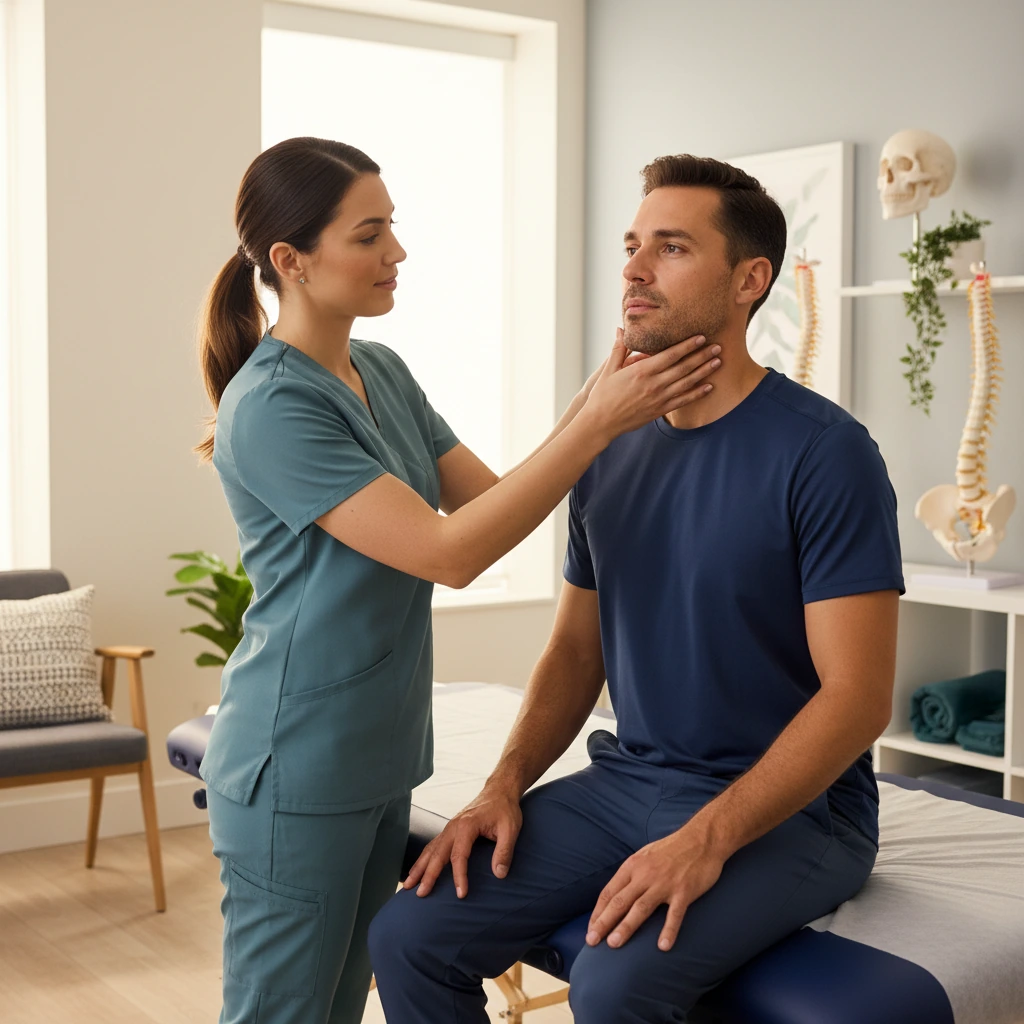
Common Causes & Contributing Factors in TMJ Dysfunction
Bruxism (Teeth Grinding & Clenching)
Stress & Jaw Tension
Car Accident & Whiplash
Disc Displacement or Derangement
Forward Head Posture
Jaw Arthritis (OA & RA)
Myofascial Pain & Trigger Points
Cervical Spine Dysfunction
Dental Work & Prolonged Mouth Opening
Hypermobility & Joint Laxity
Sleep-Related Bruxism
Head Trauma or Jaw Fracture
How Dynamic PT Treats TMJ Dysfunction
Our TMD treatment goes beyond the jaw - addressing the full jaw - neck - posture system with hands-on care, targeted exercise, and coordination with your dental team when appropriate.
TMJ Joint Mobilization
Skilled intra-oral and extra-oral manual therapy applied directly to the temporomandibular joint - restoring normal disc mechanics, reducing joint compression, improving mouth opening, and addressing the mechanical dysfunction that prevents the jaw from moving smoothly.
Masticatory Myofascial Release
Targeted manual deactivation of trigger points in the masseter, temporalis, pterygoid, digastric, and suboccipital muscles - the primary myofascial contributors to jaw pain, referred headache, and morning soreness from overnight clenching.
Cervical Manual Therapy
Joint mobilization and soft tissue work directed at the upper cervical spine (C1 - C3) - directly addressing the neurological convergence between the cervical spine and the trigeminal nerve that perpetuates TMD symptoms and makes jaw-only treatment insufficient.
Postural Correction & Ergonomics
Assessment and correction of forward head posture, rounded shoulders, and the screen habits and sleeping positions that chronically overload the masticatory system - removing the postural drivers that cause TMD to persist regardless of how well the joint is treated.
Jaw Exercise & Neuromuscular Retraining
Specific therapeutic exercises to restore coordinated jaw mechanics, strengthen the deep masticatory stabilizers, re-educate resting tongue position and jaw posture, and reduce muscle overactivity that drives bruxism and chronic jaw tension.
Dental Team Coordination
When indicated, we collaborate directly with your dentist or oral surgeon - aligning PT with night splint design and bite management. Research shows combined dental and PT management improves outcomes in over 80% of TMD cases.
What to Expect from Your First TMJ Visit
Comprehensive Craniofacial & Cervical Evaluation
Your therapist assesses jaw range of motion, joint sounds, muscle palpation, bite pattern, cervical mobility, posture, and breathing - evaluating the jaw and neck as an integrated system.
Identification of All Contributing Factors
Your therapist maps the full set of drivers - joint dysfunction, myofascial trigger points, cervical involvement, forward head posture, bruxism, stress, and sleep habits - that must all be addressed for lasting relief.
One-on-One Hands-On Treatment
Every session is dedicated, individual time with your licensed therapist - applying joint mobilization, myofascial release, cervical manual therapy, and jaw exercise instruction in a carefully sequenced program.
Home Program & Habit Modification
You receive jaw exercises, posture reminders, guidance on jaw-aggravating habits (gum chewing, hard foods, clenching), sleep positioning advice, and jaw relaxation techniques for continuous progress between sessions.
Coordination with Your Dental Team
If you are working with a dentist for a night splint or other intervention, we coordinate to ensure PT and dental treatment are aligned - maximising the outcome of both approaches.
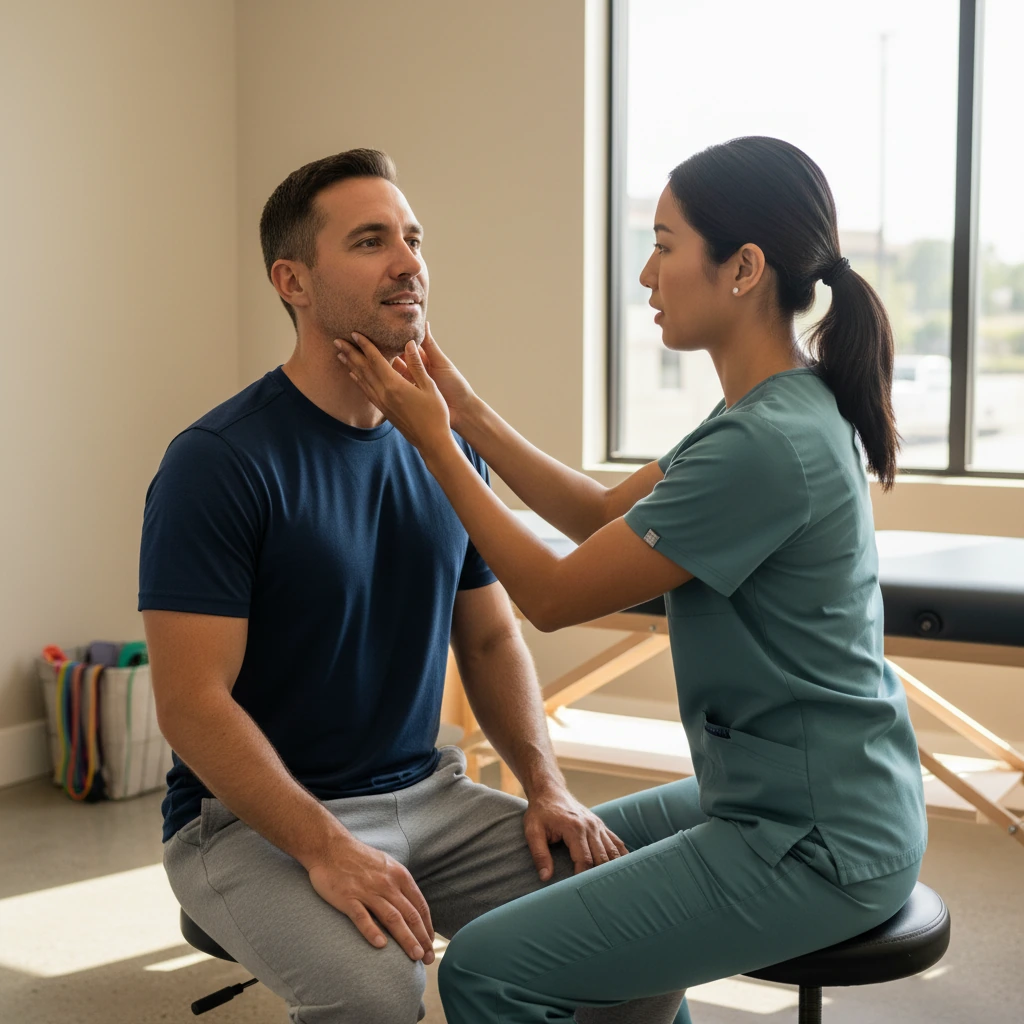
Benefits of PT for TMJ Dysfunction
Drug-Free, Non-Surgical Relief
Most TMD cases resolve with conservative physical therapy - without the risks of jaw surgery, long-term muscle relaxants, or steroid injections. PT addresses the mechanical cause, not just the symptom.
Restore Full Jaw Opening
Regain the ability to eat, talk, laugh, and yawn without pain or restriction - with joint mobilization and therapeutic exercise restoring the full, coordinated jaw movement TMD progressively erodes.
Reduce Headaches & Facial Pain
By addressing myofascial trigger points and cervical dysfunction, PT produces meaningful reductions in TMD-associated headaches, temple pain, and facial tension - often where headache medication has failed.
Prevent Recurrence
Postural correction, jaw neuromuscular retraining, and habit modification address the root causes of TMD - ensuring relief is durable and reducing the likelihood of recurrence from the same mechanical drivers.
TMJ Dysfunction FAQs
Should I see a dentist or a physical therapist for TMJ?
Both play an important role - and research shows the best outcomes come from combined dental and PT management. Dentists address bite alignment, night splints, and dental interventions. Physical therapists address the musculoskeletal contributors: joint mechanics, myofascial trigger points, cervical dysfunction, and postural drivers that a dental appliance alone cannot resolve. If you already have a dentist managing your TMD, PT is an important complement. If you haven't seen a dentist, we can evaluate your jaw and refer you if a dental assessment is indicated.
Can PT help if I've had TMJ problems for years?
Yes - and patients with longstanding TMD are some of the most rewarding to treat. Chronic TMD typically involves accumulated myofascial trigger points, habitual jaw tension patterns, and cervical dysfunction that have solidified over years - but all of these respond to skilled PT. Many patients who have lived with daily jaw pain and headaches for years achieve significant relief within 4 - 8 weeks of consistent treatment.
I have a clicking jaw but no pain. Do I need treatment?
Jaw clicking alone, without pain or functional limitation, generally does not require treatment and is common in the general population. However, if clicking is accompanied by any pain (even mild), headaches, restricted opening, or ear symptoms, a clinical evaluation is worthwhile. Our therapists can assess whether your jaw mechanics are contributing to any symptoms you may not yet have connected to the TMJ.
My jaw locked. What should I do?
Jaw locking - whether locked open or closed - indicates significant disc displacement and warrants prompt evaluation. If your jaw is currently locked, contact your dentist or physician for an immediate assessment. Once the acute lock is resolved, physical therapy is a critical next step - specific manual techniques for anterior disc displacement significantly reduce the likelihood of recurrence, and early PT consistently produces better long-term jaw mechanics than waiting.
Can PT help TMJ pain that started after a car accident?
Yes - post-MVA TMD is one of the most commonly missed car accident injuries. Collision forces can directly traumatise the TMJ through airbag deployment and bracing, and indirectly through the whiplash mechanism acting on the cervical-jaw kinetic chain. TMJ symptoms may appear days to weeks after the accident. At Dynamic PT, we accept No-Fault insurance for car accident injuries and can evaluate and treat TMD alongside any neck or spine involvement, with clinical documentation that supports your No-Fault claim.
How many PT sessions will I need for TMJ?
Most acute TMD presentations respond meaningfully within 6 - 10 sessions over 4 - 6 weeks. Many patients notice significant pain reduction within the first 2 - 3 sessions once trigger points and joint mechanics are addressed. Chronic cases with longstanding myofascial involvement and cervical dysfunction may require 12 - 16 sessions over 8 - 10 weeks.
Is TMJ physical therapy covered by insurance?
Coverage for TMD physical therapy varies by plan. Many commercial insurance plans, Medicare, and Workers' Compensation cover PT for TMD when medically necessary. No-Fault insurance covers TMD treatment when related to a motor vehicle accident. At Dynamic Physical Therapy, we verify your complete benefits before your first appointment. Call us at (516) 661-9880 and our team will confirm your coverage in advance.