COVID-19 Rehabilitation & Long COVID Recovery Program
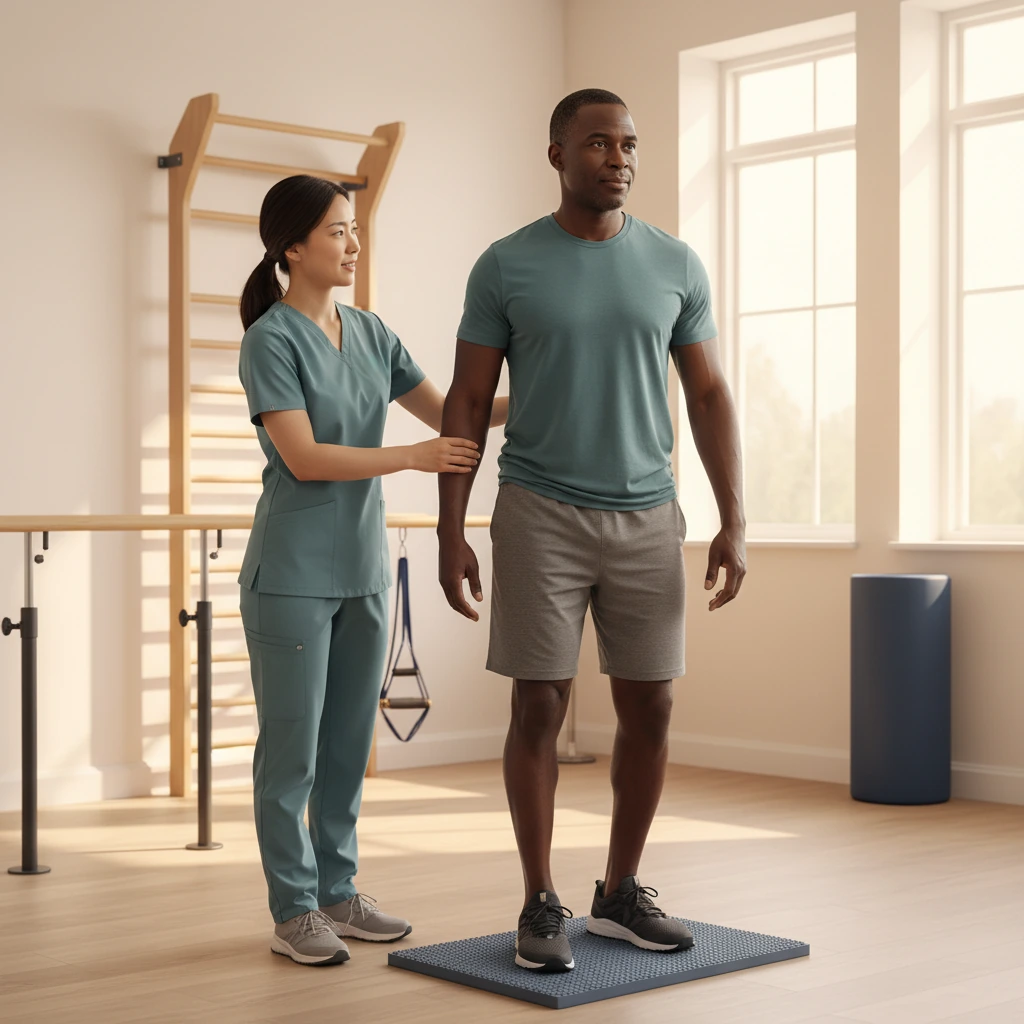
Long COVID Is Real. Your Symptoms Are Not in Your Head. And Standard PT Is Not the Answer.
An estimated 1 in 9 people who contract COVID-19 develop Long COVID - persistent symptoms that continue for weeks, months, or years beyond the initial infection. These symptoms do not correlate with how severe the original illness was. People who had mild COVID at home, never hospitalised, develop the same debilitating Long COVID as those who spent weeks in the ICU. The virus does not follow the rules of conventional injury and recovery.
At Dynamic Physical Therapy, our COVID-19 Rehabilitation Program is built around the current evidence-based guidelines for Long COVID management - not conventional rehabilitation protocols that were designed for injury and surgical recovery. The foundational difference is this: pushing through fatigue does not work for Long COVID. The program is built on pacing, symptom stabilisation, and gradual, carefully monitored return to function - because the wrong approach makes Long COVID worse, sometimes significantly and for a prolonged period.
What Long COVID Is - and Why It Requires a Different Rehabilitation Approach
Long COVID (also called Post-COVID Condition or Post-Acute Sequelae of SARS-CoV-2, PASC) is defined as symptoms persisting beyond 12 weeks after a COVID-19 infection that cannot be explained by an alternative diagnosis. It is a multisystem condition - affecting the respiratory, cardiovascular, neurological, musculoskeletal, and autonomic nervous systems simultaneously and in varying combinations across individuals.
What makes Long COVID uniquely challenging to rehabilitate is Post-Exertional Symptom Exacerbation (PESE) - the worsening of symptoms following physical or cognitive activity that can occur 12 - 72 hours after the exertion. PESE is the reason conventional graded exercise therapy, which works for deconditioning and most post-viral fatigue, can significantly worsen Long COVID in affected individuals. Safe rehabilitation requires PESE screening before any exercise is introduced - and the WHO guidelines explicitly state that cardiac impairment and exertional desaturation must be ruled out before exercise training begins.
Symptoms Beyond 12 Weeks
Long COVID is characterised by symptoms persisting more than 12 weeks post-infection. Some patients recover within months; others experience symptoms for years. Recovery is typically non-linear - with periods of improvement and relapse rather than steady progression.
Not Related to Initial Severity
Long COVID does not correlate with how ill the original infection was. Mild cases managed at home produce the same Long COVID severity as ICU cases. This is critical - patients who had "just a mild case" are often dismissed, when their Post-COVID symptoms may be profoundly disabling.
Multisystem Involvement
Long COVID affects multiple organ systems simultaneously - respiratory, cardiovascular, neurological, and autonomic. Each patient presents with a different combination of systems involved, which is why rehabilitation must be individually assessed rather than protocol-driven.
Functional Disability Despite Normal Tests
Many Long COVID patients have normal blood tests, normal chest X-rays, and normal cardiovascular screening - yet are functionally disabled. The pathology is real but often not captured by standard investigations, leading to patients being told nothing is wrong when they are genuinely unwell.
The Critical Difference: Post-Exertional Symptom Exacerbation (PESE)
Post-Exertional Symptom Exacerbation - also called Post-Exertional Malaise (PEM) - is the hallmark feature that makes Long COVID rehabilitation fundamentally different from standard physical therapy. PESE is a delayed worsening of symptoms - fatigue, cognitive difficulties, pain, breathlessness - that occurs 12 - 72 hours after physical or cognitive exertion that felt manageable at the time. Patients often feel fine during activity, then crash the following day.
The WHO explicitly states that graded exercise therapy as typically applied should not be used in patients with PESE without thorough screening and modification. At Dynamic PT, every COVID-19 rehabilitation patient is screened for PESE before any exercise is introduced. For patients with PESE, the program is built around the Stop, Rest and Pace framework - which means doing less than feels possible, not more, and gradually expanding the energy envelope over time rather than pushing against it.
The Full Range of Post-COVID Symptoms Physical Therapy Can Help Manage
Long COVID presents differently in every individual. The following are the most common symptom clusters that physical therapy directly addresses - alongside appropriate referral for symptoms requiring specialist medical management.
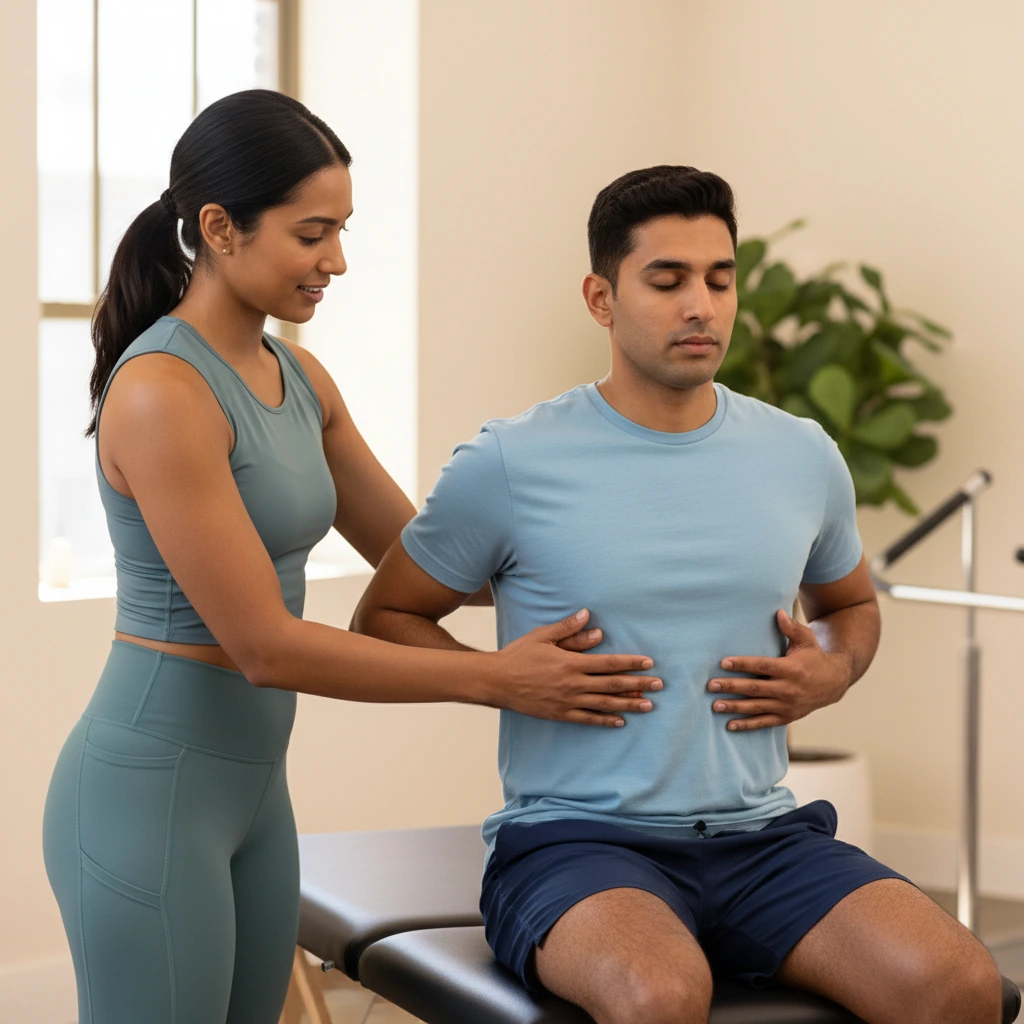
How We Approach Long COVID Rehabilitation at Dynamic PT
Each component of the program is selected based on your individual symptom profile, PESE status, and functional capacity assessment - never applied as a generic post-COVID protocol.
Pacing & Energy Management
The cornerstone of safe Long COVID rehabilitation. Your therapist helps you identify your current energy envelope - the threshold of activity you can sustain without triggering PESE - and establishes a structured daily routine that stays within it. Pacing is not passive rest; it is active strategic management of activity and recovery to gradually expand capacity without triggering crashes. This is harder than it sounds and requires consistent coaching to implement effectively.
Respiratory Rehabilitation
Breathing retraining and respiratory muscle strengthening for patients with breathlessness, reduced lung capacity, and dysfunctional breathing patterns following COVID-19 respiratory involvement. Techniques include diaphragmatic breathing retraining, inspiratory muscle training, thoracic mobility exercises, and breathing pattern correction - all carefully dosed below the PESE threshold.
Graded Activity Progression
For patients who have been screened and confirmed not to have significant PESE, carefully dosed and individually calibrated graded activity - beginning far below the patient's perceived capacity and advancing only when symptom response over the subsequent 48 - 72 hours confirms tolerance. Combined aerobic and resistance training has the strongest evidence base for improving fatigue and breathlessness in Long COVID when dosed appropriately.
Cognitive Rehabilitation & Brain Fog
Structured cognitive rehabilitation for brain fog - combining paced cognitive activities, SMARTfit dual-task cognitive-motor training, sleep hygiene guidance, and education on cognitive fatigue management. Cognitive activity carries the same PESE risk as physical activity in Long COVID, and is scheduled and dosed with the same care as exercise within the overall pacing framework.
Balance & Vestibular Retraining
For patients with balance problems, dizziness, or orthostatic intolerance - targeted vestibular rehabilitation, proprioceptive retraining, and autonomic conditioning strategies delivered within PESE-safe activity limits. Orthostatic intolerance (symptoms worsening with standing) requires specific positional management strategies before upright balance training is appropriate.
Gentle Strengthening & Mobility
Progressive strengthening targeting the generalised muscle weakness and deconditioning that Long COVID and prolonged low activity levels produce - calibrated to stay within the symptomatic tolerance of each patient. Manual therapy for musculoskeletal pain, joint stiffness, and myofascial restriction that impair daily function and contribute to ongoing activity limitation.
What to Expect from Your COVID-19 Rehabilitation at Dynamic PT
Comprehensive Long COVID Assessment
Your first session is a thorough assessment of your symptom profile, functional capacity, activity tolerance, PESE status, cardiovascular response to activity, respiratory function, balance, cognitive function, and sleep. This baseline establishes the foundation for every aspect of the program.
PESE Screening & Activity Threshold Determination
Before any exercise or activity program is introduced, your therapist screens for Post-Exertional Symptom Exacerbation and determines your current activity threshold - the level below which you can consistently function without triggering a symptom crash. This threshold, not your perceived capacity, determines the starting point of the program.
Individualised, Pacing-Based Program Design
Your program is built from the components most relevant to your specific symptom profile - pacing guidance, respiratory rehabilitation, cognitive strategies, gentle strengthening, balance work, or a combination - all calibrated to your current tolerance rather than a generic Long COVID protocol.
Ongoing Symptom Monitoring
Every session begins with a symptom check that includes the 48 - 72 hour response to previous sessions and activities. If PESE was triggered, the program is scaled back rather than continued at the same level. Progress is slow and non-linear - setbacks are expected and planned for, not treated as failures.
Self-Management Education & Long-Term Planning
Long COVID often requires long-term management beyond a finite PT course. You leave with the pacing tools, activity diaries, symptom monitoring systems, and self-management strategies to continue managing your condition independently - with clear guidance on when to return for further input as your condition evolves.
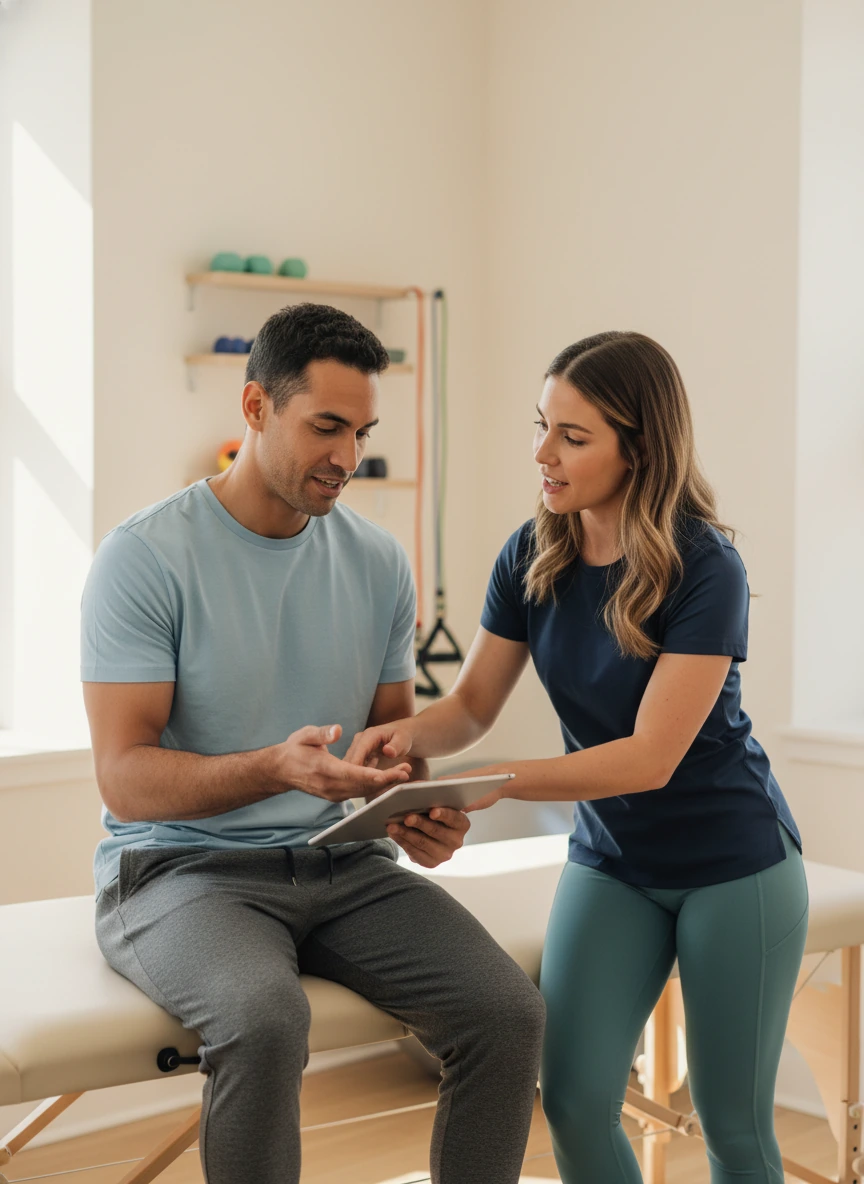
What Our Long COVID Program Can Help You Achieve
Symptom Stabilisation
The first goal of Long COVID rehabilitation is preventing the boom-and-bust activity cycle that perpetuates PESE crashes. Pacing education and energy management reduces the frequency and severity of symptom exacerbations - creating a stable foundation for gradual improvement.
Gradual Functional Improvement
Evidence-based Long COVID rehabilitation programs consistently improve exercise capacity, breathlessness, fatigue, and quality of life over 6 - 12 weeks - when correctly dosed and monitored. A 6-week supervised program increased exercise capacity by 85m on walking tests in clinical trials.
Cognitive Function Recovery
Structured cognitive rehabilitation and SMARTfit dual-task training address the brain fog and cognitive fatigue that Long COVID produces - improving concentration, processing speed, and working memory in parallel with physical rehabilitation.
Return to Daily Life
The ultimate goal - returning to the activities, work, and social function that Long COVID has restricted. The timeline varies significantly between individuals, but a structured, appropriately paced rehabilitation program is the most effective path toward improved daily function and quality of life.
Long COVID Rehabilitation FAQs
Why can't I just exercise my way through Long COVID?
For most post-viral fatigue and deconditioning, graded exercise therapy - gradually increasing activity - is the evidence-based approach that works. Long COVID is different because of Post-Exertional Symptom Exacerbation. In patients with PESE, activity triggers a delayed immune and autonomic response that causes profound symptom worsening 12 - 72 hours later. Patients who try to push through this - who exercise through fatigue in the belief that the more they do, the stronger they'll get - consistently report worsening their condition, sometimes dramatically. The WHO guidelines explicitly recommend against graded exercise therapy for patients with PESE. This doesn't mean no activity ever; it means starting well below your perceived capacity, staying there until your system stabilises, and advancing only when the 48 - 72 hour symptom window confirms tolerance.
How do I know if I have Long COVID?
Long COVID is defined as new or persistent symptoms occurring more than 12 weeks after a confirmed or probable COVID-19 infection, that cannot be fully explained by an alternative diagnosis. Symptoms can include fatigue, breathlessness, brain fog, muscle pain, sleep disturbance, balance problems, palpitations, and others. Importantly, you do not need to have been hospitalised or to have had a severe initial infection - Long COVID occurs in people who had mild illness at home. You do not need a confirmed positive test if the timing and symptom pattern are consistent with COVID-19 infection. Your GP or primary care physician can assess you for Long COVID and provide a diagnosis or referral.
How is this different from standard physical therapy?
Several fundamental differences. First, PESE screening before any exercise - standard PT does not routinely screen for post-exertional symptom exacerbation, because it is not typically relevant to musculoskeletal conditions. Second, the pacing framework as the primary intervention - Long COVID rehabilitation does not start with exercise; it starts with activity management and symptom stabilisation. Third, the dose of activity is set far below perceived capacity rather than at or beyond it - the opposite of conventional rehabilitation loading principles. Fourth, the 48 - 72 hour symptom window is actively monitored and used to guide progression - not session-by-session comfort. Fifth, cognitive activity is managed with the same care as physical activity, because brain fog and cognitive exertion carry the same PESE risk as physical exercise in Long COVID.
How long does Long COVID rehabilitation take?
Significantly longer than conventional PT courses, and with a different trajectory. Most evidence-based Long COVID programs run 8 - 12 weeks as a minimum, with the first several weeks focused entirely on symptom stabilisation and pacing education before any exercise progression begins. For patients with significant PESE, the initial stabilisation phase may be longer. Recovery from Long COVID is typically non-linear - periods of improvement are interspersed with relapses, particularly during infections, high-stress periods, or activity overexertion. Some patients recover substantially within months; others continue to have ongoing symptoms and require longer-term management strategies. Your therapist will provide an honest prognosis based on your symptom profile and PESE status at assessment.
Is Long COVID rehabilitation covered by insurance?
Physical therapy for Long COVID is covered by Medicare, Medicaid, and most commercial insurance plans when medically necessary - documented with appropriate functional limitations and physician referral. The functional impairments of Long COVID (reduced exercise tolerance, balance deficits, muscle weakness, respiratory dysfunction) meet standard criteria for PT medical necessity. At Dynamic Physical Therapy, we verify your complete benefits before your first appointment. Call (516) 661-9880 and our team will confirm your coverage and assist with referral coordination if needed.