Joint Mobilization Therapy in Queens & Long Island
Restoring What Joints Are Actually Supposed to Do - Move Freely in Every Direction
Joint stiffness, restricted range of motion, and joint pain are rarely caused by what patients assume - they are most often the result of impaired arthrokinematics, shortened joint capsules, and the loss of the small accessory gliding and rolling movements that normal joint mechanics require. Imaging frequently shows nothing wrong, yet the pain and restriction are real and functionally significant. This is exactly what joint mobilization addresses.
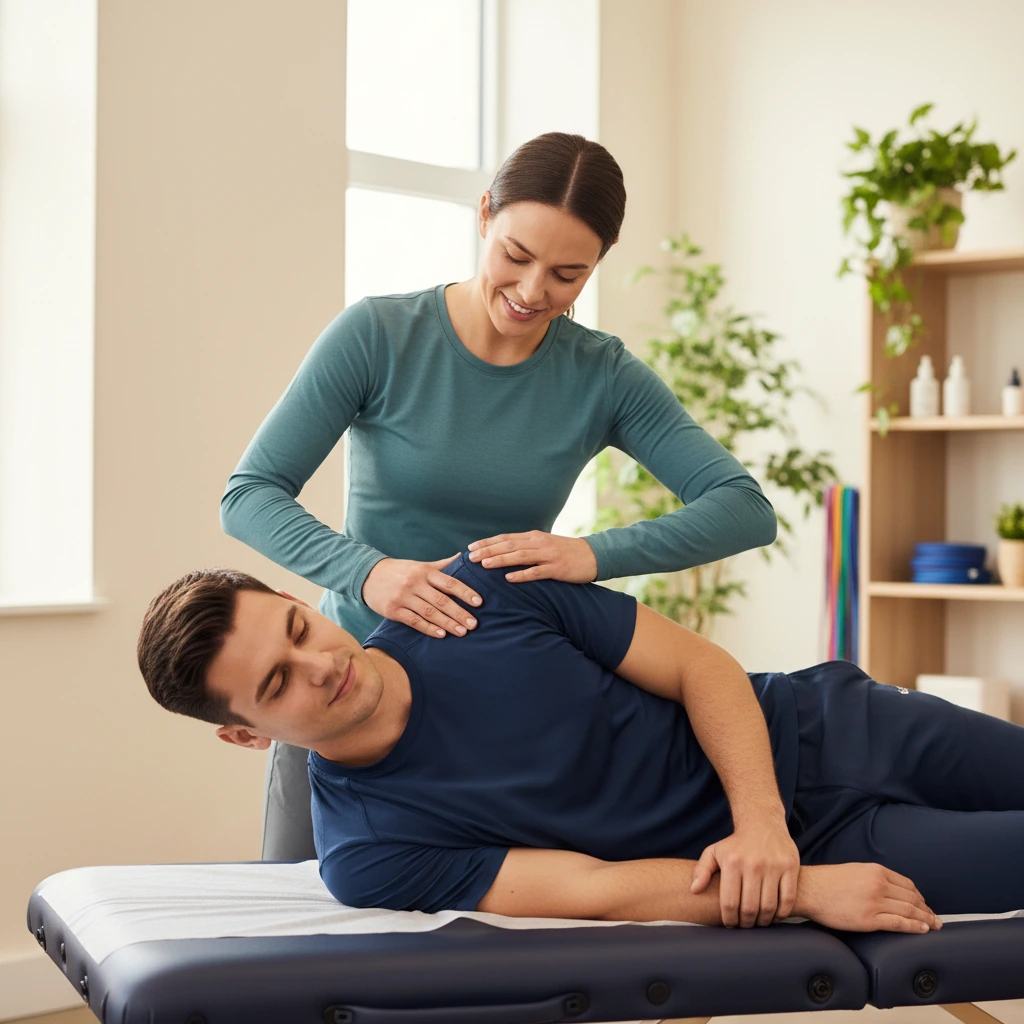
Joint mobilization is a skilled, hands-on manual therapy technique in which a licensed physical therapist applies precise, controlled passive movements to a joint - calibrated in direction, amplitude, speed, and force according to the clinical presentation. Used correctly, it produces measurable and immediate improvements in joint range of motion, pain levels, and movement quality that exercise and stretching alone cannot achieve. At Dynamic Physical Therapy, joint mobilization is a core component of every treatment plan involving joint restriction - applied one-on-one by therapists trained in the Maitland and Kaltenborn approaches to graded joint treatment.
The Five Grades of Joint Mobilization
Joint mobilization is not a single technique applied at one intensity. The Maitland grading system classifies mobilization into five grades - each with a distinct physiological purpose, suited to different stages of pain and restriction. Selecting the right grade for the right presentation is what separates skilled manual therapy from generic joint work.
Small Amplitude at Start of Range
Gentle, low-amplitude oscillations at the very beginning of available joint range - where no tissue resistance is encountered. Grade I works on a neurophysiological level, activating mechanoreceptors that inhibit pain signals via the pain gate mechanism. Used for acutely painful or inflamed joints where any pressure into resistance would worsen symptoms.
Large Amplitude, No Resistance
Large-amplitude oscillations through the range but stopping before tissue resistance is reached. Grade II maintains joint mobility and continues neurophysiological pain inhibition while allowing movement through a greater arc. Used for pain-dominant presentations where the joint needs movement but cannot yet tolerate stretch.
Large Amplitude Into Resistance
Large-amplitude oscillations that move into the zone of tissue resistance - stretching the shortened joint capsule and periarticular tissues. Grade III is the primary mobility-restoration grade, producing mechanical stretch to stiff capsular tissue while remaining rhythmic enough to limit pain inhibition. Used for stiffness-dominant presentations.
Small Amplitude at End of Range
Precise, small-amplitude oscillations at the end of available range - providing a targeted stretch to the stiffest, most resistant part of the joint capsule and ligamentous tissue. Grade IV is the most specific grade for end-range joint restriction and is used when Grade III has established improved mobility and the joint can now tolerate targeted end-range work.
High Velocity, Low Amplitude Thrust
A single, rapid, small-amplitude thrust at or beyond the end of available range - applied beyond the physiological barrier to restore joint play. Grade V is manipulation, not mobilization, and requires thorough clinical screening before application. Produces immediate neurophysiological pain relief and joint range restoration when correctly indicated and applied.
Why Direction Matters - Arthrokinematics and the Convex-Concave Rule
Every synovial joint moves through a combination of osteokinematic motion (the visible swinging movement of the limb) and arthrokinematic motion (the accessory rolling, gliding, and spinning that occurs between joint surfaces during that movement). These accessory movements cannot be performed voluntarily - they are dependent on the shape and integrity of joint surfaces and the surrounding capsule.
When arthrokinematic motion is impaired - by capsular tightness, post-surgical adhesion, injury, or degeneration - the osteokinematic motion it supports becomes restricted and painful. Effective joint mobilization must be applied in the correct direction for the specific joint surface shape to restore the lost accessory movement. This is governed by the convex-concave rule, which determines whether gliding occurs in the same or opposite direction to the bone movement being restored.
Convex-on-Concave Rule
When a convex joint surface moves on a stationary concave surface - as in the humeral head on the glenoid during shoulder abduction - the glide occurs opposite to the direction of bone movement. Therapeutic glides must follow this rule to restore the correct arthrokinematic pattern.
Concave-on-Convex Rule
When a concave surface moves on a stationary convex surface - as in the proximal phalanx on the metacarpal head during finger flexion - the glide occurs in the same direction as bone movement. The therapeutic glide reinforces and restores this accessory component of normal joint motion.
Joint Traction
Traction - gentle distraction of joint surfaces - reduces compressive loading on pain-sensitive intra-articular structures, improves synovial fluid distribution, and reduces the protective muscle guarding that accompanies joint compression pain. Particularly beneficial for arthritic and inflamed joints before oscillatory mobilization begins.
Accessory Movements
The rolling, gliding, and spinning that occurs between joint surfaces during normal movement. Loss of these accessory movements - which cannot be restored through active exercise alone - is the primary mechanism by which joint mobilization restores full range of motion in stiff and painful joints.
When a Joint Needs More Than Exercise and Stretching
Joint restriction and arthrokinematic dysfunction produce a recognisable pattern of symptoms that distinguish them from purely muscular or fascial problems - and that respond specifically to hands-on joint mobilization.
Joint Restrictions Across the Spine & Extremities That Respond to Mobilization
Frozen Shoulder (Adhesive Capsulitis)
Lumbar & Cervical Spine Stiffness
Osteoarthritis (Knee, Hip, Shoulder)
Post-Surgical Joint Stiffness
Shoulder Impingement & Rotator Cuff
Hip Labral Pathology & FAI
ACL & Meniscal Rehabilitation
Ankle Stiffness & Sprain Rehabilitation
Wrist & Hand Joint Restriction
Cervicogenic Headaches
Whiplash & Cervical Joint Injury
TMJ Dysfunction & Jaw Restriction
Joint Mobilization Approaches at Dynamic PT
Our therapists are trained in multiple joint mobilization frameworks - selecting the approach and grade most appropriate to each joint, each presentation, and each patient's response during the session.
Maitland Oscillatory Mobilization
Rhythmic, graded oscillations applied to peripheral and spinal joints at precisely selected amplitudes and positions within the range - chosen based on whether the presentation is pain-dominant (lower grades) or stiffness-dominant (higher grades). The Maitland approach emphasises continuous reassessment, adjusting technique grade and direction in response to the joint's moment-to-moment response during treatment.
Kaltenborn Sustained Traction & Gliding
Sustained, low-load traction and gliding techniques applied at progressively increasing grades - from gentle decompression for pain relief (Grade I) through sustained capsular stretch (Grade III) for stiff, hypomobile joints. The Kaltenborn approach is particularly effective for mechanical joint restriction that hasn't responded to oscillatory techniques, providing the long-duration, low-load stretch that shortened capsular tissue requires.
Mobilization with Movement (Mulligan)
The therapist applies a sustained accessory glide to the joint while the patient performs an active movement that would normally be restricted or painful - combining passive joint correction with active patient participation to immediately restore pain-free movement. Particularly effective for lateral epicondylagia, ankle sprains, and cervical joint dysfunction where the positional fault correction produces immediate functional improvement.
Spinal Mobilization
Specific manual joint mobilization applied to individual spinal segments - from gentle Grade I - II neurophysiological techniques for acutely painful cervical and lumbar joints through Grade III - IV capsular stretch for chronic segmental stiffness. Applied with thorough pre-treatment screening and careful clinical reasoning regarding segmental levels and appropriate technique grades.
High Velocity Low Amplitude (HVLA) Manipulation
When clinically indicated and screened, Grade V HVLA manipulation provides immediate restoration of restricted joint play and produces rapid neurophysiological pain relief through the release of accumulated joint gas and the activation of inhibitory reflex pathways. Applied only after thorough assessment confirms the absence of contraindications and the appropriateness of the technique for the specific joint and patient.
Post-Mobilization Exercise
Movement and exercise prescribed immediately following joint mobilization - performed in the newly restored range to consolidate the changes made, prevent rapid return of restriction, and begin rebuilding the neuromuscular control of the joint in its improved range. The combination of mobilization and targeted exercise consistently outperforms either approach alone.
What to Expect During Joint Mobilization Treatment
Joint-Specific Assessment
Your therapist assesses the specific joints involved - measuring available range, identifying the quality and location of movement restriction, assessing end-feel, and performing accessory movement testing to determine which directions of glide are restricted. This directs the entire mobilization plan before treatment begins.
Grade Selection Based on Presentation
Based on your pain levels, movement restriction, and end-feel quality, your therapist selects the appropriate grade - beginning at the grade most likely to produce benefit without aggravation, and adjusting up or down based on your joint's response during the technique.
Hands-On Joint Mobilization
The technique is applied with your joint positioned appropriately for the target structure. Oscillatory techniques feel like rhythmic joint movement; sustained techniques feel like gentle, continuous pressure. Most patients describe joint mobilization as immediately relieving, with the sensation of the joint "loosening" or "freeing up" during treatment.
Immediate Reassessment
Range of motion and pain are reassessed immediately after each mobilization set - the response guides whether to continue the same technique, progress the grade, change direction, or move to a different joint. The Maitland concept of continuous reassessment ensures treatment is responsive rather than formulaic.
Exercise in the Restored Range
Following mobilization, specific exercises are performed in the newly restored range - retraining the neuromuscular system to use the improved range and preventing the joint from returning to restriction between sessions. You receive a home program to maintain and build on the gains made in clinic.

What Joint Mobilization Achieves That Exercise Alone Cannot
Restores Accessory Movement
The rolling, gliding, and spinning between joint surfaces that normal range of motion requires cannot be restored through active exercise - it requires passive hands-on mobilization applied in the correct arthrokinematic direction for that specific joint.
Immediate Pain Relief
Even Grade I - II mobilization produces immediate neurophysiological pain relief by activating joint mechanoreceptors that inhibit pain signals at the spinal cord level - the pain gate mechanism that underlies one of manual therapy's most clinically consistent effects.
Stretches the Joint Capsule
Grade III - IV oscillations and Kaltenborn Grade III sustained stretch lengthen shortened capsular and periarticular tissue - the dense fibrous restriction that exercise, stretching, and massage cannot reach - producing lasting improvements in available range of motion.
Accelerates Recovery
Joint mobilization combined with exercise consistently produces faster and more complete recovery from joint injury, surgery, and arthritic restriction than exercise alone - reducing the time spent in rehabilitation and the likelihood of residual movement limitations.
Joint Mobilization FAQs
What is the difference between joint mobilization and manipulation?
Joint mobilization (Grades I - IV) involves controlled, graded passive movements applied within or up to the end of the joint's available range - at slow to moderate speeds and varying amplitudes. These are non-thrust techniques and can be stopped at any time. Joint manipulation (Grade V) is a single high-velocity, low-amplitude thrust applied at or beyond the end of available range - producing the characteristic "pop" or "crack" sound. Manipulation requires the most thorough screening and clinical reasoning and is applied only when clearly indicated. Both are manual therapy techniques; the distinction is the speed, amplitude, and position within the range at which force is applied.
Does joint mobilization hurt?
Grade selection is specifically designed to control the patient's experience during treatment. Grades I and II are typically painless - they work in the range before tissue resistance and are often immediately relieving. Grades III and IV work into resistance and may produce some discomfort as the restricted capsule is stretched - similar to the sensation of a good stretching exercise. Your therapist continuously checks in and adjusts the technique grade to keep discomfort within acceptable limits while still producing therapeutic effect. Post-treatment soreness is common for up to 24 hours but should not be severe; if it is, the grade was too aggressive and will be reduced in the next session.
How is joint mobilization different from chiropractic adjustment?
Chiropractic treatment primarily uses Grade V HVLA manipulation - the thrust technique - applied predominantly to the spine. Physical therapy joint mobilization uses the full spectrum of Grades I - V, with the vast majority of treatment delivered through Grades I - IV oscillatory and sustained techniques that do not involve a thrust. PT mobilization is also integrated into a comprehensive rehabilitation program that includes exercise, soft tissue work, and movement retraining - not applied in isolation. Physical therapists also routinely mobilize peripheral joints (shoulder, hip, knee, ankle, wrist) using the same graded approach, which is less common in chiropractic practice.
Can joint mobilization help arthritis?
Yes - and the evidence is strong. For osteoarthritic joints, joint mobilization produces meaningful reductions in pain and improvements in mobility. Grade I - II techniques provide neurophysiological pain relief and improve synovial fluid distribution through the joint. Grade III - IV techniques maintain and restore the mobility that progressive arthritis reduces. Gentle joint traction reduces the compressive loading on articular surfaces that drives arthritic pain. Combined with appropriate exercise, joint mobilization is one of the most effective conservative interventions for knee, hip, and shoulder osteoarthritis - improving function and delaying the need for surgical intervention.
Is joint mobilization covered by insurance?
Joint mobilization delivered as part of a physical therapy plan of care is covered by Medicare, Medicaid, and most commercial insurance plans when medically necessary. It is billed as a manual therapy service within your PT session. At Dynamic Physical Therapy, we verify your complete benefits before your first visit so there are no surprises. Call (516) 661-9880 and our team will confirm your coverage in advance.