Diagnostic Testing in Queens & Long Island
Objective, in-clinic electrodiagnostic and imaging studies - performed by our clinical team, scheduled quickly, and integrated directly into your treatment plan.
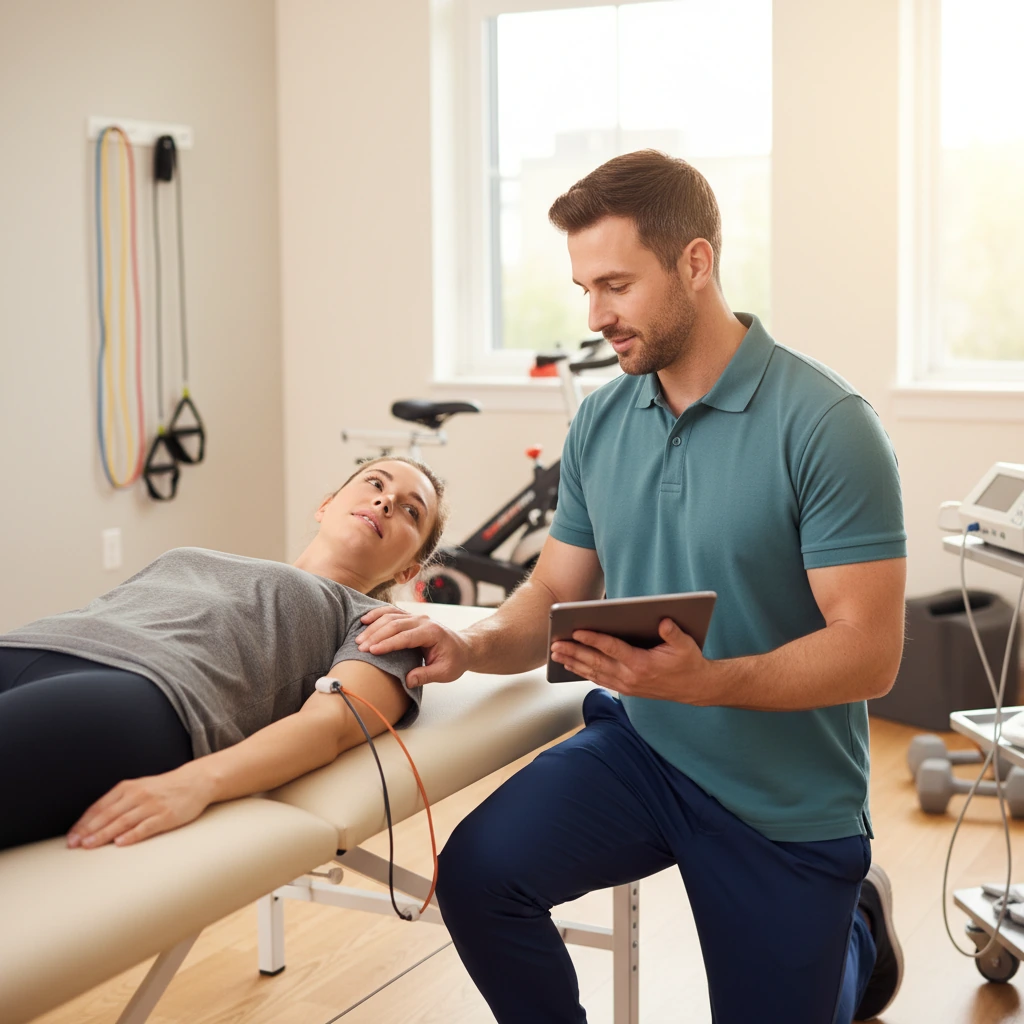
The Testing That Confirms the Diagnosis - and Sharpens the Treatment That Follows
Physical therapy works best when it is matched to a confirmed diagnosis. Clinical examination findings, symptom descriptions, and MRI reports provide important information - but they are not always sufficient to determine exactly which structure is affected, how severely, and what the correct treatment pathway is. Objective diagnostic testing closes that gap.
At Dynamic Physical Therapy, electrodiagnostic studies and imaging are performed in our clinics by our clinical team - not referred out to a separate facility with its own scheduling timeline, its own report turnaround, and its own referral chain. Testing is coordinated in-house, findings are reviewed promptly, and the treatment plan is updated without the usual outside-lab delay. That integration is the clinical advantage that in-clinic diagnostic capability provides.
The Conventional Diagnostic Pathway - and Why We Collapsed It
In most clinical settings, the diagnostic pathway for a patient with nerve pain, dizziness, or a suspected tendon tear involves multiple steps: the treating provider identifies the need for testing, generates a referral, the patient contacts a separate diagnostic facility, waits for an available appointment (often weeks), attends that separate appointment, waits for the report to be generated and transmitted, and finally returns to the treating provider to review findings and update the treatment plan. This pathway commonly takes four to eight weeks from clinical suspicion to treatment adjustment.
At Dynamic Physical Therapy, that pathway is compressed dramatically. The clinical need is identified, the appropriate test is coordinated in-house, and the findings are reviewed with your therapist without the usual referral-chain lag. For patients with progressive nerve conditions where early correct treatment changes outcomes, this faster diagnostic timeline is not just a convenience. It is a clinical advantage that directly affects how quickly and how completely patients recover.
Our In-Clinic Diagnostic Services
Three focused diagnostic modalities - each assessing a different aspect of neuromuscular and musculoskeletal function, each with specific clinical indications, and all integrated directly into your care.
EMG & Nerve Conduction Studies
The gold-standard tests for peripheral nerve and muscle function - assessing the speed, strength, and integrity of electrical conduction along peripheral nerves and the health of the muscles they supply.
Musculoskeletal Ultrasound (MSKUS)
Real-time, dynamic imaging of tendons, muscles, ligaments, bursae, nerves, and joints - using high-frequency sound waves. No radiation. Immediate results. The only imaging modality that shows pathology during the movement that provokes symptoms.
Nerve Conduction Velocity (NCV) Studies
A component of the EMG/NCS battery, NCV studies can also be performed as a targeted, stand-alone assessment when the clinical question is specifically about peripheral nerve conduction - without the full needle EMG component.
How Diagnostic Testing Integrates with Your Physical Therapy Care
Diagnostic testing at Dynamic PT is not a standalone service - it is embedded in the clinical workflow that runs from your first contact through your discharge. Each step feeds the next.
Clinical Assessment
Your therapist identifies the clinical question - which structure, which nerve level, which type of pathology - that objective testing needs to answer, and selects the appropriate diagnostic modality.
In-Clinic Testing
EMG/NCS, targeted NCV, or MSKUS is coordinated in-house by our clinical team. No separate referral, no separate outside appointment chain, and far less waiting between questions and answers.
Results & Interpretation
Findings are reviewed with you immediately - explained in plain language, related to your symptoms, and documented in a report for your physician or legal team if applicable.
Treatment Updated
The diagnostic finding directly updates your rehabilitation program - selecting the correct technique, intensity, and focus based on objective evidence rather than clinical inference alone.
Which Diagnostic Test Is Right for Your Presentation?
Each modality answers a different clinical question. Understanding the difference helps your therapist select the right test - or the right combination - for your specific symptoms.
Nerve, Muscle, Gait, and Soft Tissue Conditions - Confirmed Objectively
Our diagnostic testing covers the conditions we most commonly need to clarify in outpatient rehab - from peripheral nerve entrapments and radiculopathy to tendon pathology, gait mechanics, and muscle dysfunction.
Not Sure Which Test You Need?
Our clinical team determines the appropriate diagnostic study based on your symptoms, clinical examination findings, and the specific question that needs to be answered. You do not need to know which test applies - your therapist does.
Schedule Free AssessmentCall (516) 661-9880
The Right Diagnosis Changes Everything.
Start with a free complimentary assessment. Your therapist will perform a complete clinical evaluation, identify what objective testing is indicated, and begin moving your care from clinical impression to confirmed diagnosis.