SMARTfit - Dual-Task Cognitive Motor Training in Queens & Long Island
The Only Rehabilitation Technology That Trains Your Brain and Your Body at the Same Time
SMARTfit is an interactive, gamified dual-task cognitive motor training system used in physical therapy to simultaneously challenge physical movement and cognitive function - because in real life, the brain and body are never working in isolation. Whether you're catching yourself from a fall, returning to sport, or recovering from a stroke, your brain must coordinate movement, make split-second decisions, and process visual information all at once. Traditional PT trains the body. SMARTfit trains the system.
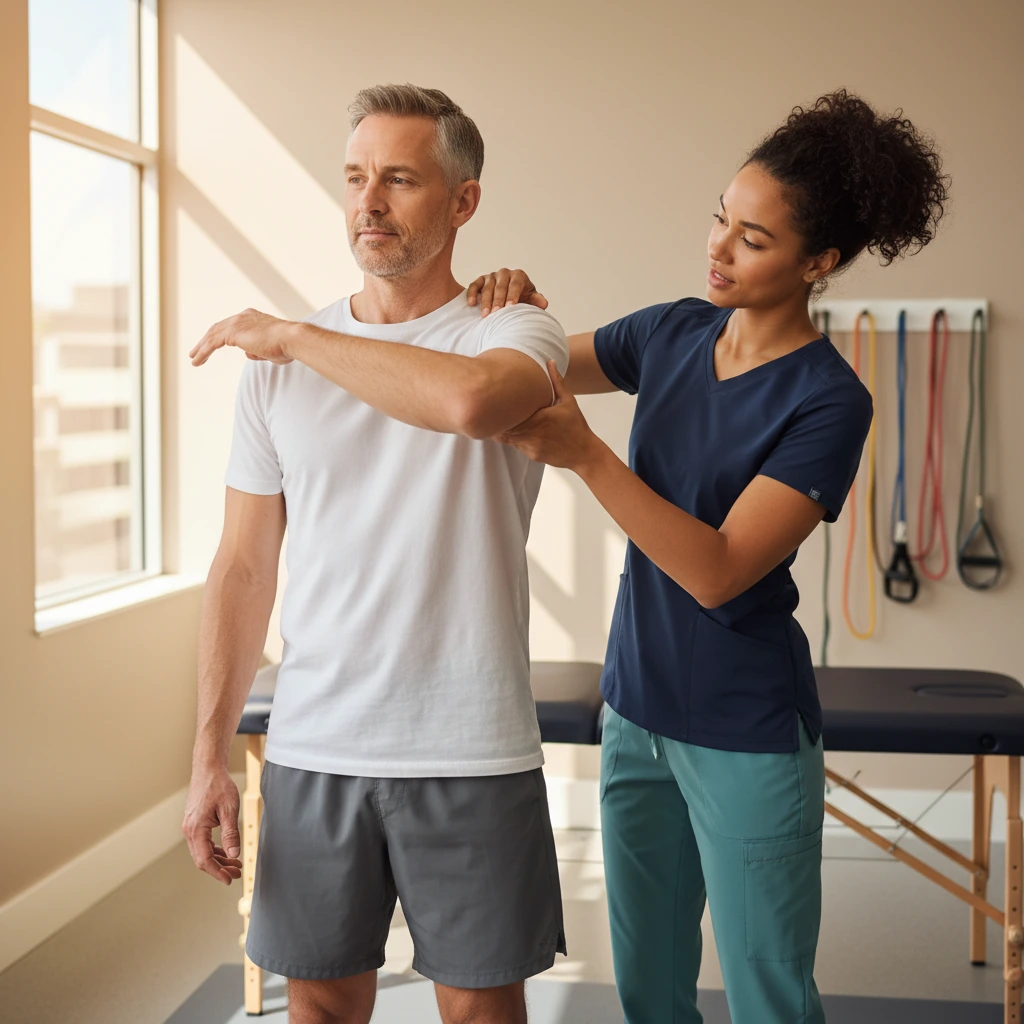
At Dynamic Physical Therapy, SMARTfit is integrated into one-on-one treatment sessions - used by your licensed therapist as a precision tool to progress rehabilitation for neurological conditions, balance disorders, sports performance, and cognitive-motor decline. Programs are individually designed, scaled to your current level, and tracked session-to-session so your improvement is objectively measurable. It is, without exception, the most engaging thing patients do in PT - and engagement drives results.
Why Training Brain and Body Together Produces Better Results Than Training Either Alone
Over 30 years of neuroscience research consistently demonstrates that cognitive-motor dual-task training - performing a cognitive challenge simultaneously with a physical task - produces faster, more durable functional gains than either type of training in isolation. SMARTfit operationalises this science into an engaging, gamified training environment.
Neuroplasticity Under Load
The brain rewires itself most effectively when challenged to solve two problems simultaneously. SMARTfit's dual-task format - hitting a target while processing a cognitive rule - places the nervous system under precisely the kind of combined load that drives neuroplastic change. This is the mechanism behind faster functional recovery from stroke, concussion, and neurological conditions.
Automaticity & Real-World Transfer
Real-life movement requires automaticity - the ability to perform motor skills without conscious attention, because conscious attention is occupied by everything else happening around you. SMARTfit's cognitive loading forces motor patterns toward automaticity faster than repetitive single-task practice, producing rehabilitation gains that transfer to real-world function rather than just performing well in the clinic.
Visual-Cognitive-Motor Integration
SMARTfit trains the integration of visual processing, cognitive decision-making, and motor execution as a unified system - the same integration required to catch a ball, navigate a crowded space, drive a car, or perform a sport-specific skill under pressure. Isolating these systems in training produces improvement in each; training them together produces improvement in the system.
The Dual-Task Cost
Research consistently demonstrates that people with neurological conditions, balance disorders, and cognitive decline show a disproportionate degradation in motor performance when cognitively loaded - the "dual-task cost." SMARTfit specifically quantifies and trains this deficit through standardised dual-task cost testing, targeting the precise gap between single-task and dual-task performance.
Objective Progress Tracking
Every SMARTfit session produces objective data - reaction time, accuracy, cognitive-motor speed, and dual-task cost metrics - that are tracked from session to session. This objective measurement makes progress visible, motivates patients to continue, and provides your therapist with precise data to guide program progression rather than relying on subjective impression.
Engagement Drives Adherence
Patient adherence - consistently completing the full course of prescribed treatment - is one of the strongest predictors of rehabilitation outcome. SMARTfit's gamified format consistently produces higher engagement and session completion rates than conventional exercise. Patients compete against their own previous scores, progressing through increasingly challenging levels. They come back, and they try harder.
Interactive Targets, Real-Time Feedback, and Programmes Designed for Your Specific Goals
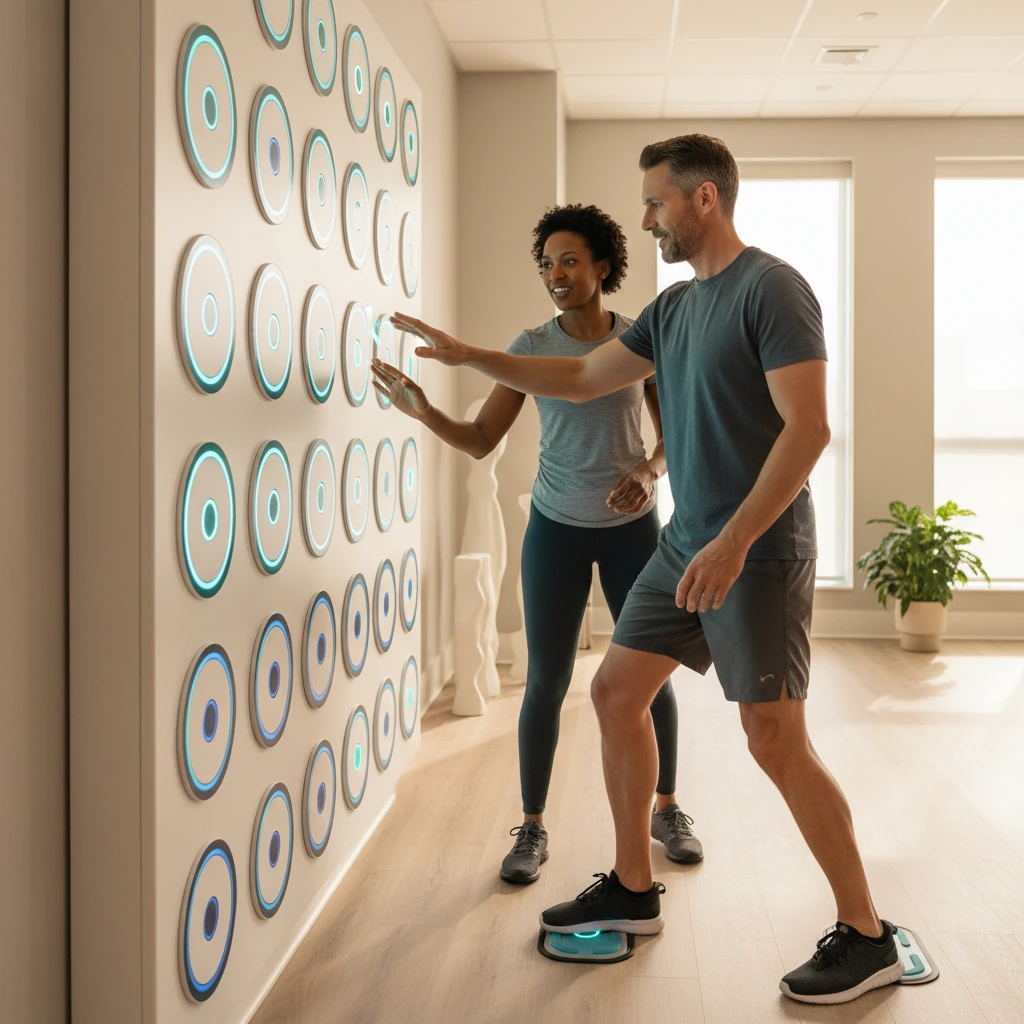
SMARTfit consists of an interactive target system - illuminated strike pads and screens - connected to a customisable software platform with over 1,000 built-in activities spanning cognitive-motor speed, balance, coordination, reaction time, memory, and executive function. The patient interacts with the targets by striking, touching, or moving toward them according to the rules of each activity.
The cognitive challenge is integrated directly into the physical task - for example, striking only blue targets while moving through balance challenges, or alternating between left and right while following a changing numerical sequence. Activities scale automatically from simple to complex based on patient performance, ensuring every session operates at the therapeutic edge of challenge - difficult enough to drive adaptation, achievable enough to maintain engagement.
Strike & Touch Target System
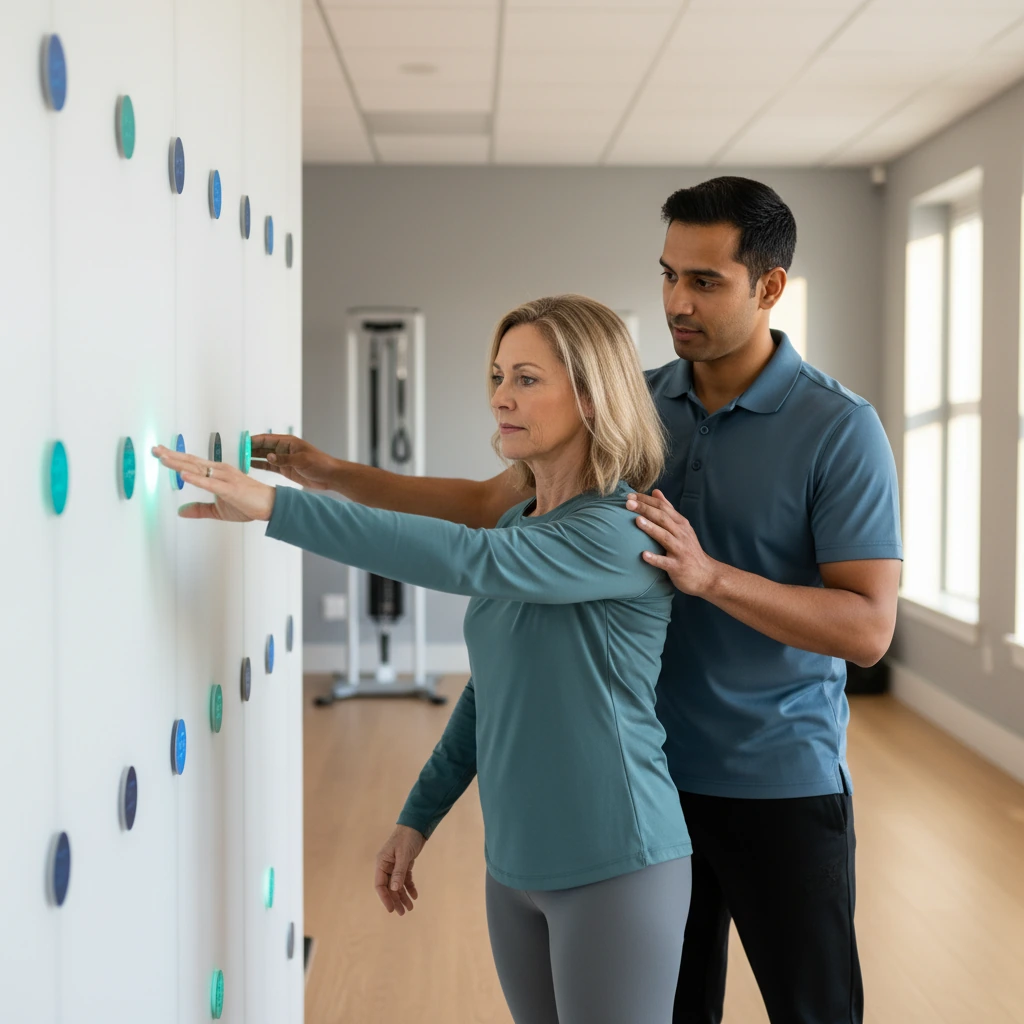
Illuminated targets require physical interaction - striking, touching, or reaching - while cognitive rules determine which targets to interact with and when. The physical demand is adjustable from seated to standing to dynamic balance challenges.
Fully Customisable Programming
Your therapist builds your program from over 1,000 available activities - selecting the cognitive challenge type, physical demand level, duration, and progression rules that match your current function and rehabilitation goals.
Session-to-Session Progress Data
Reaction time, accuracy, and dual-task cost scores are recorded every session - producing objective progress reports that document your cognitive-motor improvement and guide your therapist's programming decisions.
Adaptive Difficulty Progression
The system scales challenge automatically to maintain the therapeutic difficulty level as your performance improves - ensuring you are always training at the edge of your current capacity rather than becoming comfortable and plateauing.
Four Populations. One System. Completely Different Programs.
SMARTfit's flexibility means it serves radically different patient populations - from a child working on motor skill development to a stroke survivor rebuilding functional independence to an elite athlete preparing for return to sport.
Neurological Rehabilitation
For patients recovering from stroke, traumatic brain injury, concussion, or living with Parkinson's disease - SMARTfit trains the cognitive-motor integration that neurological conditions specifically disrupt, producing functional gains that conventional exercise alone cannot achieve.
Balance & Fall Prevention (Geriatric)
Falls are the leading cause of injury-related hospitalisation in older adults - and the majority occur while the mind is occupied with something else. SMARTfit specifically trains the dual-task walking ability that determines real-world fall risk, and is proven to reduce fall frequency in older populations.
Sports Performance & Return to Play
Elite sport performance is not purely physical - it requires rapid decision-making, visual processing, and motor execution under pressure simultaneously. SMARTfit develops the cognitive-motor speed and automaticity that separate athletes who perform well in training from those who perform well under competitive pressure.
Orthopaedic Rehabilitation
Post-surgical and post-injury orthopaedic rehabilitation traditionally focuses on strength and range of motion - but returning to full function requires the integration of motor patterns with real-time environmental demands. SMARTfit bridges the gap between the rehabilitation clinic and the real world.
When Dual-Task Training Should Be Part of Your Rehabilitation
SMARTfit is not just for neurological patients - it's relevant whenever rehabilitation needs to address the gap between performing a movement in isolation and performing it in the real world.
What to Expect When You Start SMARTfit Training at Dynamic PT
Baseline Cognitive-Motor Assessment
Your first SMARTfit session begins with a standardised baseline assessment - measuring your single-task and dual-task performance across reaction time, accuracy, and cognitive-motor speed. This establishes the objective starting point against which all future progress is measured.
Individualised Program Design
Based on your assessment results, diagnosis, and rehabilitation goals, your therapist designs a programme from SMARTfit's library of activities - selecting the cognitive challenge type, physical demand level, positioning (seated, standing, dynamic), and progression parameters specific to your needs.
Supervised Training Sessions
SMARTfit training occurs within your one-on-one PT session, supervised by your therapist - who monitors your performance, adjusts the challenge level in real time, and integrates the SMARTfit activities with your wider rehabilitation program. You are never using the system unsupervised or in place of direct therapist contact.
Progressive Challenge Escalation
As your reaction time improves, accuracy increases, and dual-task cost reduces, your therapist escalates the program - increasing cognitive complexity, physical demand, or both - to maintain the therapeutic challenge level that drives continued adaptation.
Objective Progress Reporting
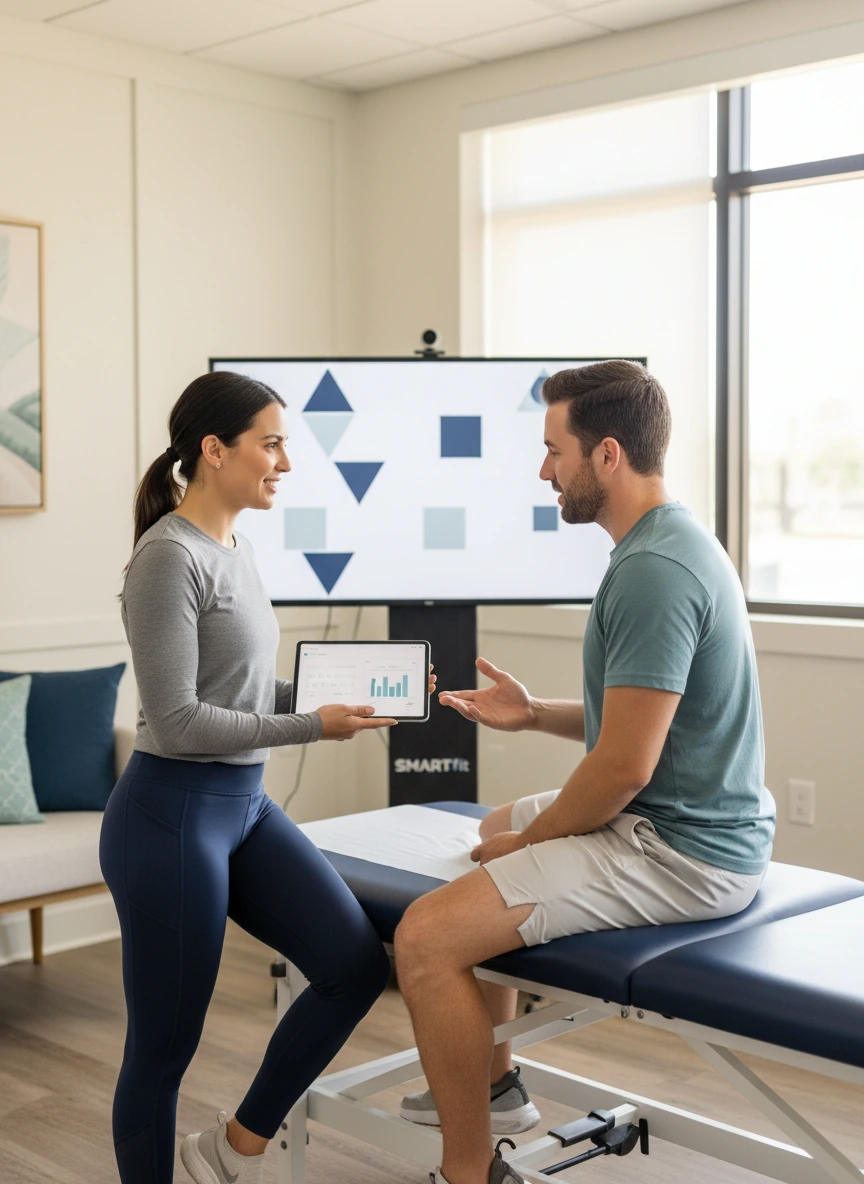
At defined intervals, your therapist generates a progress report from your session data - showing your reaction time trends, accuracy improvements, and dual-task cost reduction over time. This data supports clinical decision-making, insurance documentation, and gives you a clear, motivating picture of your improvement.
What Makes SMARTfit Different from Conventional Rehabilitation Exercise
Trains the Full System
Conventional rehab trains muscles, joints, and balance in isolation. SMARTfit trains the integrated cognitive-motor system - producing gains that transfer to real-world function rather than just performing well in a clinical exercise setting.
Objective, Measurable Progress
Every session produces objective data. Progress is not a clinical impression - it's a documented reaction time curve, accuracy trend, and dual-task cost reduction that is visible to you and your therapist session by session.
Consistently Engaging
Patient engagement in rehabilitation directly predicts outcomes. The gamified, competitive format of SMARTfit produces session attendance and effort rates that conventional exercise cannot - because patients genuinely want to improve their score.
Infinitely Scalable
From a seated elderly patient with moderate cognitive impairment to a professional athlete preparing for return to play - SMARTfit scales to any level. The same system serves every population at exactly the right challenge for their current ability.
SMARTfit FAQs
What does a SMARTfit session actually look like?
Imagine standing in front of an interactive target system. Targets light up in different colours and positions. Your task might be to strike only the blue targets in sequence - while simultaneously maintaining your balance on a foam surface. Or to alternate left-right strikes while counting backward from 20. The cognitive task is integrated directly into the physical challenge, forcing your brain to coordinate thinking and moving simultaneously. Sessions are 10 - 20 minutes of SMARTfit activity, integrated into your broader one-on-one PT session. Most patients describe it as genuinely fun - and considerably harder than it looks. The competitive scoring system means most people are trying to beat their previous score from the first session.
Is SMARTfit appropriate for older adults with limited mobility?
Yes - and it is one of the most beneficial populations for SMARTfit. The system is fully scalable from seated to standing to dynamic balance challenges. An older adult with limited mobility can participate in highly effective cognitive-motor training in a seated position - with targets positioned at the appropriate height and distance - and progress gradually toward standing and dynamic balance challenges as their condition improves. The gamified format is particularly well-received by older adults who find conventional exercise monotonous and struggle to maintain motivation across a full rehabilitation program.
How does SMARTfit help with Parkinson's disease specifically?
Parkinson's disease specifically impairs the automaticity of movement - the ability to perform motor tasks without conscious attention. This is why people with Parkinson's freeze when walking and talking, or struggle to walk through a doorway when distracted. SMARTfit's dual-task training directly targets this deficit, training the ability to maintain motor performance while simultaneously processing cognitive demands. A USC study conducted at the Neurorestoration Center found that SMARTfit dual-task training produced meaningful improvements in both motor and cognitive outcomes in Parkinson's patients - making it one of the few interventions that addresses the cognitive-motor interface that is the core functional challenge of the disease.
Can SMARTfit be used after a stroke?
Yes - SMARTfit is one of the most clinically valuable tools in post-stroke rehabilitation, precisely because stroke disrupts exactly the integrated cognitive-motor function that SMARTfit trains. Post-stroke rehabilitation commonly recovers the physical component of movement - strength, range, basic balance - while the cognitive processing speed, attention, and motor-cognitive integration that determine real-world functional independence remain impaired. SMARTfit addresses this gap directly. Programming is adapted to the patient's current level - starting with simple single-target tasks and progressing to complex dual-task challenges as cognitive-motor speed and accuracy improve.
Is SMARTfit covered by insurance?
SMARTfit is used as a clinical tool within your physical therapy session and is billed as therapeutic exercise and neuromuscular re-education under standard PT CPT codes - which are covered by Medicare, Medicaid, and most commercial insurance plans when medically necessary. It is not billed as a separate service. At Dynamic Physical Therapy, we verify your complete benefits before your first appointment. Call us at (718) 826-3200 and our team will confirm your coverage.