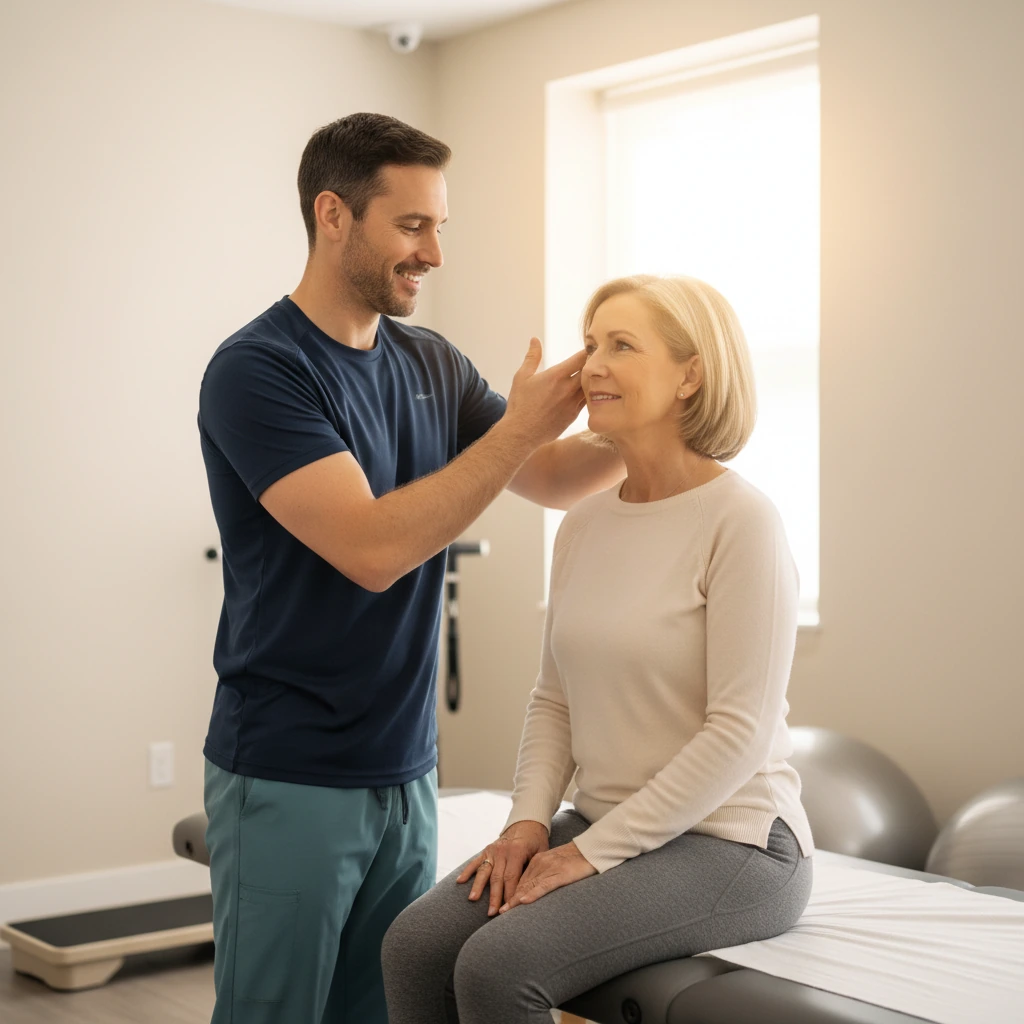
Vestibular & Vertigo Treatment in Queens & Long Island

Specialized Therapy to Treat Dizziness, Vertigo & Balance Disorders
Vestibular rehabilitation therapy (VRT) is a specialized form of physical therapy designed to retrain your brain and nervous system to properly process signals from the inner ear, eyes, and body - restoring balance, eliminating dizziness, and reducing vertigo episodes. It is one of the most clinically proven treatments for vestibular disorders, with results often seen in just a handful of sessions.
At Dynamic Physical Therapy, our vestibular rehab program begins with a thorough clinical assessment - evaluating your eye movements, balance, posture, walking ability, and symptom history - so that every exercise and technique is precisely matched to your individual diagnosis. Whether you're dealing with BPPV, vestibular neuritis, post-concussion dizziness, or chronic imbalance, our one-on-one approach ensures you receive the focused attention your condition demands.
Vestibular Rehab Techniques We Use
Our therapists are trained in a comprehensive range of vestibular and balance rehabilitation techniques, each selected based on your specific diagnosis, symptoms, and recovery goals.
Canalith Repositioning (Epley Maneuver)
The gold-standard treatment for BPPV. A carefully guided sequence of head and body positions that moves displaced calcium crystals out of the semicircular canals, often relieving spinning vertigo in one or two sessions.
Gaze Stabilization Exercises
Targeted head-eye movement exercises that retrain the vestibulo-ocular reflex (VOR), helping your eyes maintain focus during head movement - essential for reducing dizziness during daily activities.
Habituation Training
Gradual, controlled exposure to the movements or environments that trigger your dizziness. Repeated stimulation desensitizes the vestibular system, progressively reducing symptom intensity over time.
Balance & Gait Retraining
Progressive standing, walking, and weight-shifting exercises designed to improve postural stability, reduce fall risk, and restore confident, coordinated movement - from steady standing to navigating uneven terrain.
Brandt-Daroff Exercises
A home-based vestibular exercise protocol used alongside in-clinic treatment to continue the habituation process between sessions, accelerating your recovery on your schedule.
Functional Activity Training
Task-specific exercises that prepare your vestibular system for the real-world demands of your daily life - including head turns while driving, bending, reaching, and navigating crowded environments.
Vestibular & Balance Disorders We Specialize In
BPPV (Benign Paroxysmal Positional Vertigo)
Vestibular Neuritis
Labyrinthitis
Ménière's Disease
Post-Concussion Dizziness
Perilymphatic Fistula
Fall Risk & Imbalance
Whiplash-Related Dizziness
Cervicogenic Dizziness
Post-Surgical Vestibular Loss
Age-Related Balance Decline
Unilateral Vestibular Hypofunction
What to Expect During Vestibular Rehab
Comprehensive Vestibular Assessment
Your therapist will evaluate your eye movements (oculomotor screen), balance, posture, gait, and detailed symptom history to accurately identify your vestibular diagnosis.
Personalized Treatment Plan
Based on your specific condition - BPPV, vestibular hypofunction, post-concussion, or other - your therapist designs a targeted program using the most effective techniques for your diagnosis.
One-on-One In-Clinic Sessions
Every session is dedicated, individual time with your licensed therapist. No shared gym time, no distractions - just focused, skilled care for your vestibular recovery.
Home Exercise Program
You'll receive a structured home exercise plan so your vestibular system continues retraining between visits - with clear instruction on how to perform each exercise safely and effectively.
Progress Monitoring & Progression
Your therapist regularly reassesses your symptoms and functional status, progressively advancing your program to keep your recovery on track toward full independence.
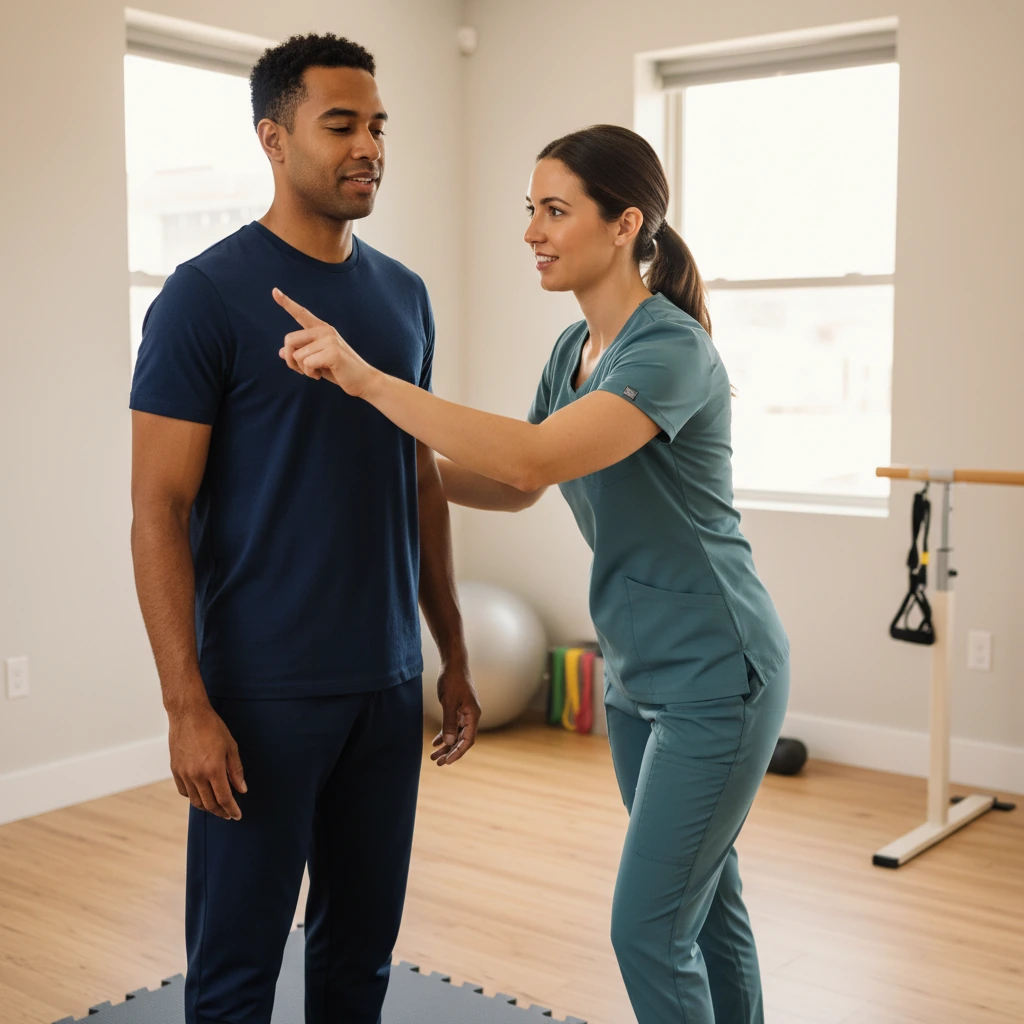
Benefits of Vestibular Rehabilitation Therapy
Rapid Vertigo Relief
Repositioning maneuvers for BPPV can resolve spinning vertigo in as little as one to two sessions - without medication or surgery.
Improved Balance & Stability
Targeted exercises retrain your body's balance systems, reducing fall risk and restoring confident, coordinated movement in everyday life.
Reduced Dizziness & Nausea
Habituation and gaze stabilization training progressively decrease the frequency, duration, and intensity of dizziness episodes over time.
Better Quality of Life
Return to driving, working, exercising, and social activities without the constant fear of dizziness limiting what you can do.
Vestibular Rehab the Way It Should Be Done