Vestibular Rehabilitation for Dizziness & Vertigo in Queens & Long Island

Dizziness, Vertigo & Balance Problems Have Specific, Treatable Causes - Let's Find Yours
Dizziness and vertigo are among the most disabling and most commonly mismanaged symptoms in medicine. They affect millions of Americans, significantly limit daily activity, dramatically increase fall risk - and yet are frequently dismissed, undertreated, or managed only with medication that addresses the symptom while leaving the underlying vestibular dysfunction unresolved.
Vestibular rehabilitation therapy (VRT) is a specialized, evidence-based physical therapy program designed to address the root cause of dizziness, vertigo, and balance dysfunction - not just mask the feeling. At Dynamic Physical Therapy, our trained vestibular therapists conduct thorough assessments of the inner ear, visual, and somatosensory systems, apply precise repositioning maneuvers for BPPV, and design individualized exercise programs that retrain your brain and body to restore stable, confident balance across all six Queens & Long Island locations.
Your Balance Depends on Three Systems Working Together - Here's What Happens When One Fails
Balance is not a single sense - it is the continuous integration of information from three distinct systems. Your brain receives input from all three simultaneously and synthesizes them into a moment-by-moment sense of where your body is in space. When any one system is damaged, missing, or sending conflicting signals, the result is dizziness, vertigo, unsteadiness, or falls.
Vestibular rehabilitation works by assessing each system individually, identifying which is contributing to your symptoms, and designing a targeted exercise program that promotes adaptation and compensation - training the brain to recalibrate its balance processing.
Vestibular System (Inner Ear)
The semicircular canals and otolithic organs detect head movement and gravity. Dysfunction here - from BPPV, vestibular neuritis, labyrinthitis, or acoustic neuroma - sends incorrect motion signals to the brain, producing vertigo and dizziness.
Visual System
Vision anchors your sense of vertical and spatial orientation. Visual-vestibular mismatch - when what you see conflicts with inner ear signals - produces the nausea, oscillopsia (blurred vision with movement), and motion sensitivity characteristic of vestibular disorders.
Somatosensory System (Proprioception)
Pressure and position receptors in the feet, joints, and muscles provide your brain with information about ground contact and body position. Peripheral neuropathy, joint disease, or cervical dysfunction can compromise this input and compound vestibular symptoms.
Central Integration (Cerebellum & Brainstem)
The brain integrates all three inputs in real time. Central vestibular dysfunction - from migraine, concussion, stroke, or multiple sclerosis - produces symptoms that differ in character from peripheral causes and requires a different rehabilitation approach.
Symptoms That Suggest You Need Vestibular Rehab
Vestibular disorders produce a wide range of symptoms - many of which patients don't immediately associate with the inner ear or balance system. If several of these sound familiar, a vestibular assessment is strongly indicated.
Vestibular & Balance Conditions Treated at Dynamic PT
BPPV (Benign Paroxysmal Positional Vertigo)
Vestibular Neuritis & Labyrinthitis
Ménière's Disease
Vestibular Migraine
Post-Concussion Vestibular Dysfunction
Unilateral Vestibular Hypofunction
Bilateral Vestibular Loss
Central Vestibular Disorders (Stroke, MS)
Acoustic Neuroma (Post-Treatment)
Age-Related Balance Disorders & Fall Prevention
Post-MVA Dizziness & Whiplash Vestibular Injury
Persistent Postural-Perceptual Dizziness (PPPD)
Vestibular Rehabilitation Techniques at Dynamic PT
VRT is not one-size-fits-all - it is a precise, individually designed program based on which vestibular condition you have and which systems are most affected.
Canalith Repositioning (Epley Maneuver & Variants)
The gold-standard treatment for BPPV - a series of precise head and body position changes that move displaced calcium carbonate crystals (otoconia) out of the semicircular canals and back into the utricle, resolving positional vertigo. The Epley maneuver resolves BPPV in up to 90% of cases, often in a single session. Variants including the Semont and BBQ roll maneuvers address different canal involvement.
Gaze Stabilisation Exercises
VOR (vestibulo-ocular reflex) exercises that train the brain to maintain stable vision during head movement - reducing the blurred, bouncing vision and motion-triggered dizziness that vestibular hypofunction produces. Progressively challenged by increasing head speed, visual complexity, and surface instability to promote central adaptation.
Balance Retraining & Postural Control
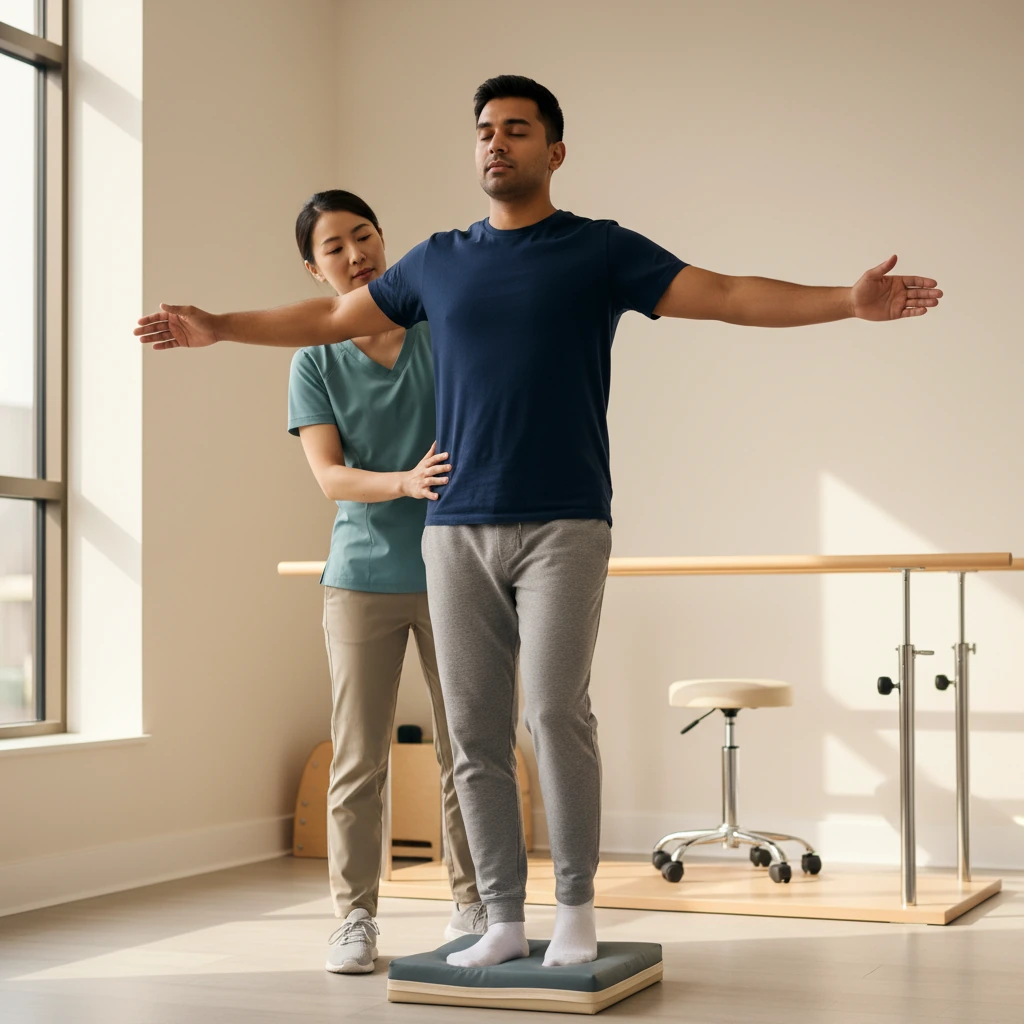
Systematic progression of standing and walking balance challenges - narrowing base of support, eyes closed, moving surfaces, head turns during walking, and dual-task conditions - retraining the brain to integrate vestibular, visual, and somatosensory input effectively and reducing fall risk across real-world environments.
Habituation Exercises
Controlled, repeated exposure to the specific movements and visual stimuli that provoke your dizziness - systematically reducing the brain's oversensitised response through graduated exposure. The controlled provocation protocol is applied progressively so that each session produces slightly less symptoms than the last, building tolerance over time.
Cervical Assessment & Manual Therapy
The cervical spine contributes proprioceptive input critical to vestibular processing - and cervical dysfunction can both mimic and compound vestibular symptoms. We assess and treat cervical contributions to dizziness and balance problems through joint mobilization, soft tissue work, and cervicogenic dizziness-specific exercises.
Fall Prevention & Safety Training
For patients with significant balance impairment or fall history, we address the environmental, footwear, medication, and movement habit factors that increase fall risk - alongside targeted balance strengthening and gait training that provides objective, measurable improvement in stability across the conditions most likely to cause a fall.
What to Expect from Your Vestibular Assessment
Detailed Symptom History
Your therapist takes a comprehensive vestibular history - including when symptoms began, what triggers them, how long episodes last, whether they are positional or spontaneous, and how they affect your daily activities and fall risk.
Positional & Nystagmus Testing
Specific positional tests (Dix-Hallpike, roll test) to identify BPPV and which canal is involved. Observation of nystagmus (involuntary eye movements) provides direct objective evidence of which component of the vestibular system is affected.
Balance & Gait Assessment
Objective balance testing using standardised measures - including the Romberg test, tandem stance, and functional gait assessment - establishing your current balance status and fall risk, and providing the baseline against which your progress will be tracked.
Gaze Stability & Oculomotor Screen
Assessment of the vestibulo-ocular reflex, smooth pursuit, saccades, and visual-vestibular interaction - identifying which gaze stability deficits are contributing to your dizziness, oscillopsia, and motion sensitivity.
Individualized VRT Program
Based on the full assessment, your therapist designs a precisely individualized vestibular rehabilitation program - beginning treatment in the same session whenever possible, particularly if BPPV repositioning is indicated.
What Vestibular Rehabilitation Achieves
Resolve BPPV Rapidly
The Epley maneuver and canalith repositioning resolve BPPV - the most common cause of vertigo - in up to 90% of cases, often within one to three sessions. Most patients experience immediate, dramatic relief following a correctly performed maneuver.
Reduce Falls & Fall Risk
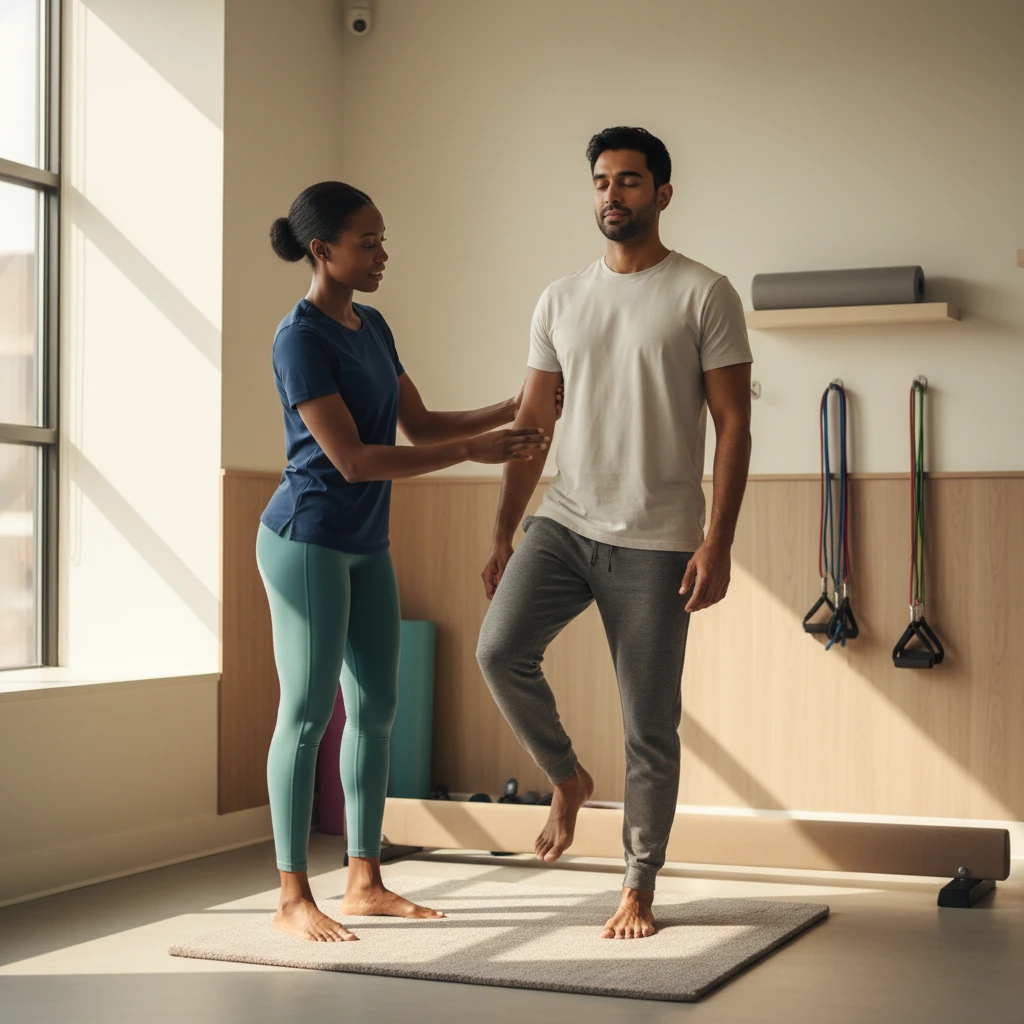
Vestibular rehabilitation consistently reduces fall risk in older adults with balance disorders - addressing one of the most serious consequences of untreated vestibular dysfunction. Balance retraining produces objective, measurable improvements in stability.
Reduce Chronic Dizziness
For vestibular hypofunction, habituation exercises, and gaze stability training, VRT produces significant reductions in chronic dizziness and motion sensitivity over 6 - 12 weeks - restoring confidence in daily activities that vestibular disorders restrict.
Avoid Long-Term Medication
Vestibular suppressants (meclizine, Valium) provide temporary symptomatic relief but suppress the central compensation that allows true recovery. VRT promotes the neurological adaptation that medications inhibit - producing lasting improvement rather than chronic dependence.
Vestibular Rehab FAQs
What is the difference between dizziness and vertigo?
Dizziness is a broad term that encompasses any sensation of spatial disorientation - lightheadedness, unsteadiness, fogginess, or a floating sensation - without a specific spinning component. Vertigo is a distinct type of dizziness characterised by the false perception of rotational movement - either you feel like you're spinning, or the room feels like it's spinning around you. This distinction matters clinically because vertigo almost always indicates a vestibular system problem (usually BPPV, vestibular neuritis, or Ménière's), while dizziness may have vestibular, cardiovascular, neurological, or metabolic causes. Our vestibular assessment distinguishes between these presentations and determines the most appropriate treatment.
What is BPPV and how is it treated?
Benign Paroxysmal Positional Vertigo (BPPV) is the most common cause of vertigo, occurring when calcium carbonate crystals (otoconia) that normally rest in the utricle of the inner ear become dislodged and migrate into one of the semicircular canals. When you move your head, these crystals move in the fluid of the canal and send false motion signals to the brain - producing brief but intense vertigo typically lasting 10 - 60 seconds, triggered by specific head positions like rolling over in bed, looking up, or bending forward. Treatment is the Epley maneuver or its variants - a series of specific head position changes performed by your therapist that guides the crystals back out of the canal. This procedure resolves BPPV in approximately 80 - 90% of cases, often in a single session, with little to no discomfort.
How long does vestibular rehabilitation take?
It depends on the condition. BPPV often resolves in 1 - 3 sessions following successful canalith repositioning. Vestibular neuritis typically requires 6 - 10 weeks of rehabilitation as the brain compensates for the unilateral peripheral deficit. Vestibular migraine and PPPD may require longer programs, particularly when significant motion sensitivity and anxiety components are present. Bilateral vestibular loss requires an ongoing, long-term exercise program for sustained management. Most patients with peripheral vestibular conditions see meaningful improvement within the first 2 - 4 weeks of consistent VRT, with continued gains over the full program duration.
Will vestibular exercises make my dizziness worse?
Initially, some VRT exercises are designed to provoke mild dizziness - this is intentional and therapeutic. The controlled exposure to dizziness-provoking movements is what drives the habituation and adaptation that produces lasting improvement. Your therapist carefully calibrates the initial intensity to ensure exercises are challenging without being overwhelming, and progresses them systematically as your brain adapts. Most patients find that any temporary worsening during or shortly after sessions settles quickly, and that overall symptom severity decreases progressively across the program. If you are experiencing significant symptom exacerbation that doesn't resolve, always inform your therapist so the program can be adjusted.
Do I need a referral for vestibular physical therapy?
In New York, you can access PT directly for an initial evaluation and up to 10 visits without a physician's referral. For most insurance plans, continued visits beyond the first 10 require a physician prescription. If you've already seen a doctor for dizziness or vertigo, bring any imaging, test results, or notes from that visit - they help us understand what has already been ruled out and which direction the assessment should focus. If you haven't seen a physician yet and your symptoms suggest a non-vestibular cause (cardiac, neurological), we will identify this and refer you appropriately.
Is vestibular rehabilitation covered by insurance?
Vestibular rehabilitation is covered by Medicare, Medicaid, and most commercial insurance plans when medically necessary - which vestibular disorders causing balance impairment and fall risk typically satisfy. No-Fault insurance covers vestibular symptoms resulting from a motor vehicle accident. At Dynamic Physical Therapy, we verify your complete benefits before your first appointment so you know your coverage in advance. Call us at (516) 661-9880 and our team will handle verification for you.