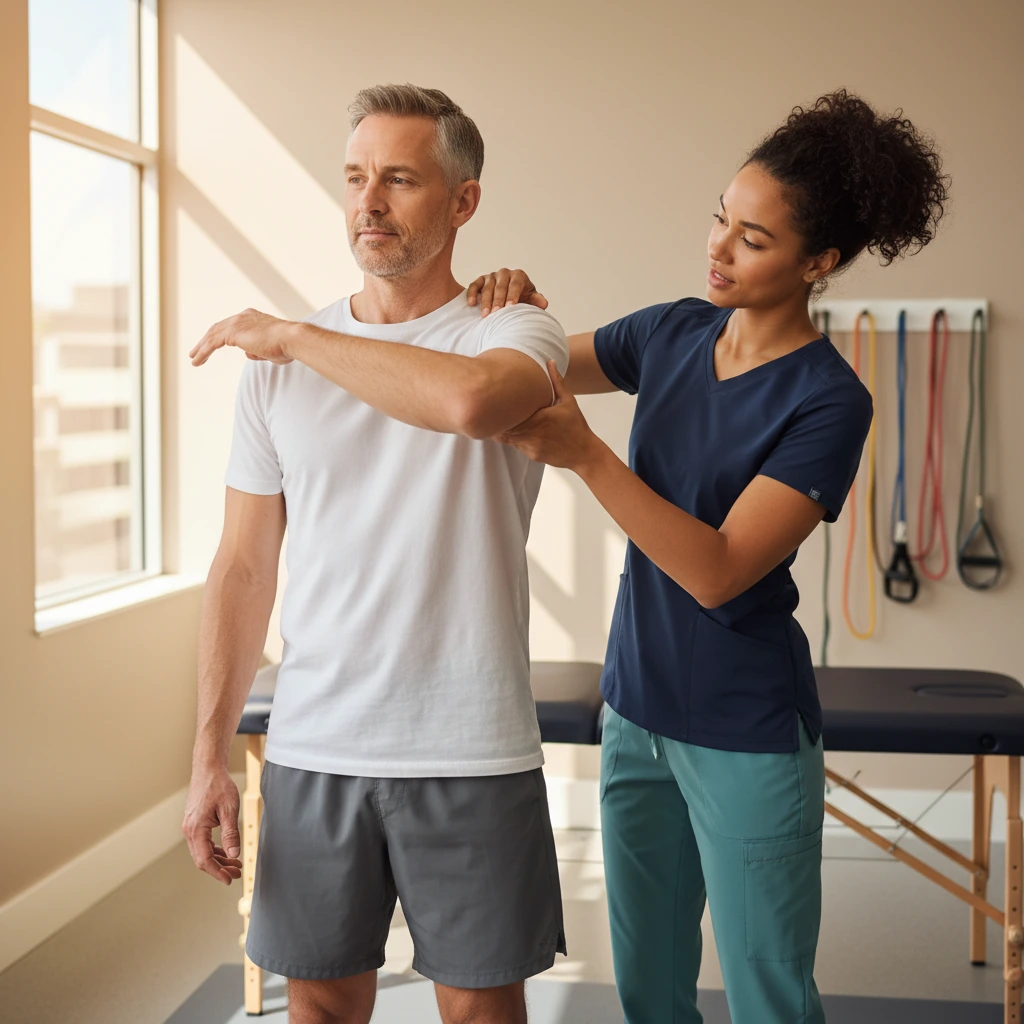
BlazePod Training in Queens & Long Island
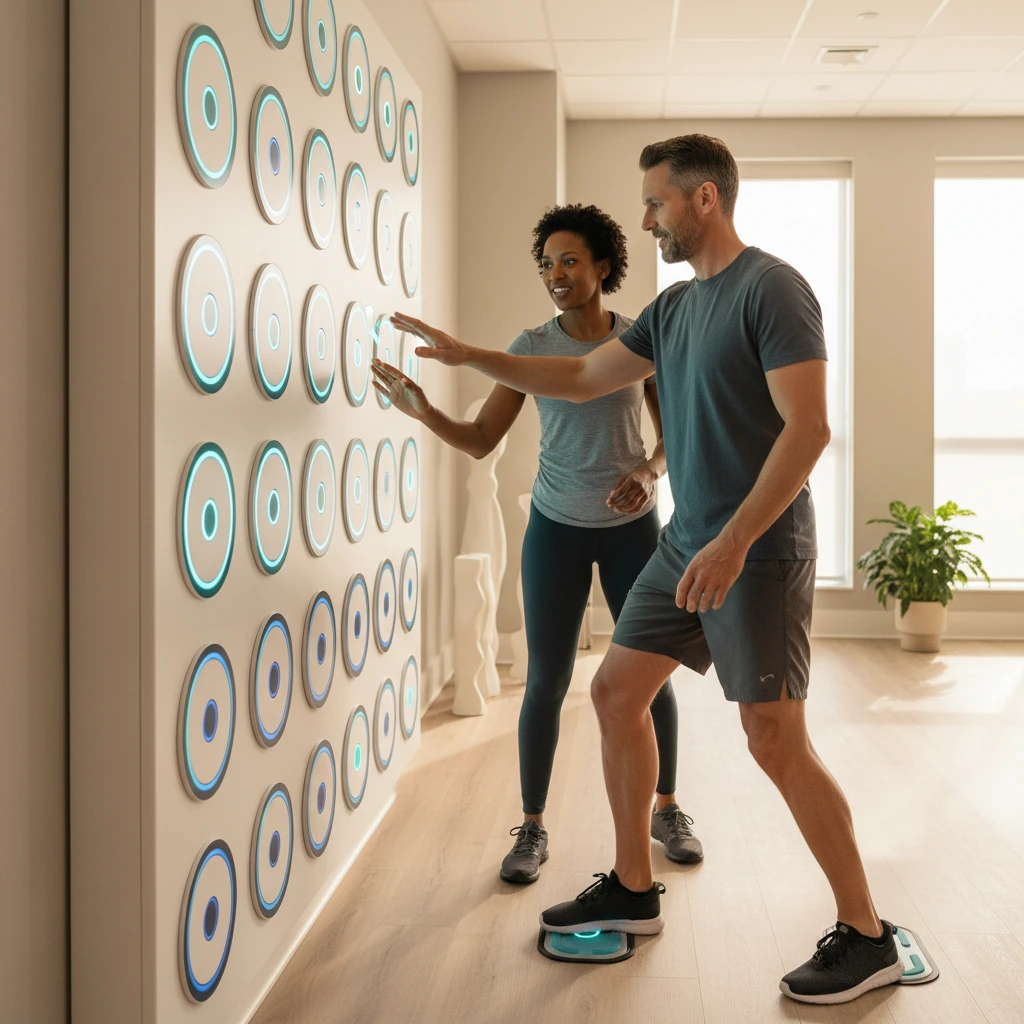
Reactive Light Training That Sharpens Decision-Making, Balance, Coordination, and Return-to-Sport Readiness
BlazePod uses interactive light targets to create fast, highly adaptable drills for movement, reaction time, visual tracking, and dual-task control. In rehab, it gives us a cleaner way to challenge the brain and body together instead of training them in isolation.
At Dynamic Physical Therapy, BlazePod is used as a therapist-guided clinical tool - not a gadget left on the floor for random drills. We match the activity to your diagnosis, current movement quality, and return-to-function goals so every session has a clear reason behind it.
It Makes Rehab More Reactive, More Real, and More Engaging
Many patients can perform a movement in isolation but struggle when attention, timing, and quick decision-making are layered on top. BlazePod helps us close that gap.
Reaction Training
Targets light up unpredictably, forcing faster visual processing and quicker movement decisions than traditional cue-based drills.
Visual-Motor Integration
Patients must see, interpret, and move in one sequence - which better reflects the demands of sport, balance recovery, and daily life.
Dual-Task Challenge
BlazePod lets us combine stepping, reaching, stability, and cognitive rules so the nervous system is challenged under realistic load.
Better Engagement
The drills are interactive and measurable, which often improves focus, effort, and adherence compared with repetitive generic exercise.
Great for Athletes, Balance Work, and Higher-Level Neuro Rehab
BlazePod is not limited to one diagnosis. It is most useful whenever rehab needs faster reactions, better movement under attention demand, or a bridge from basic control to real-world responsiveness.
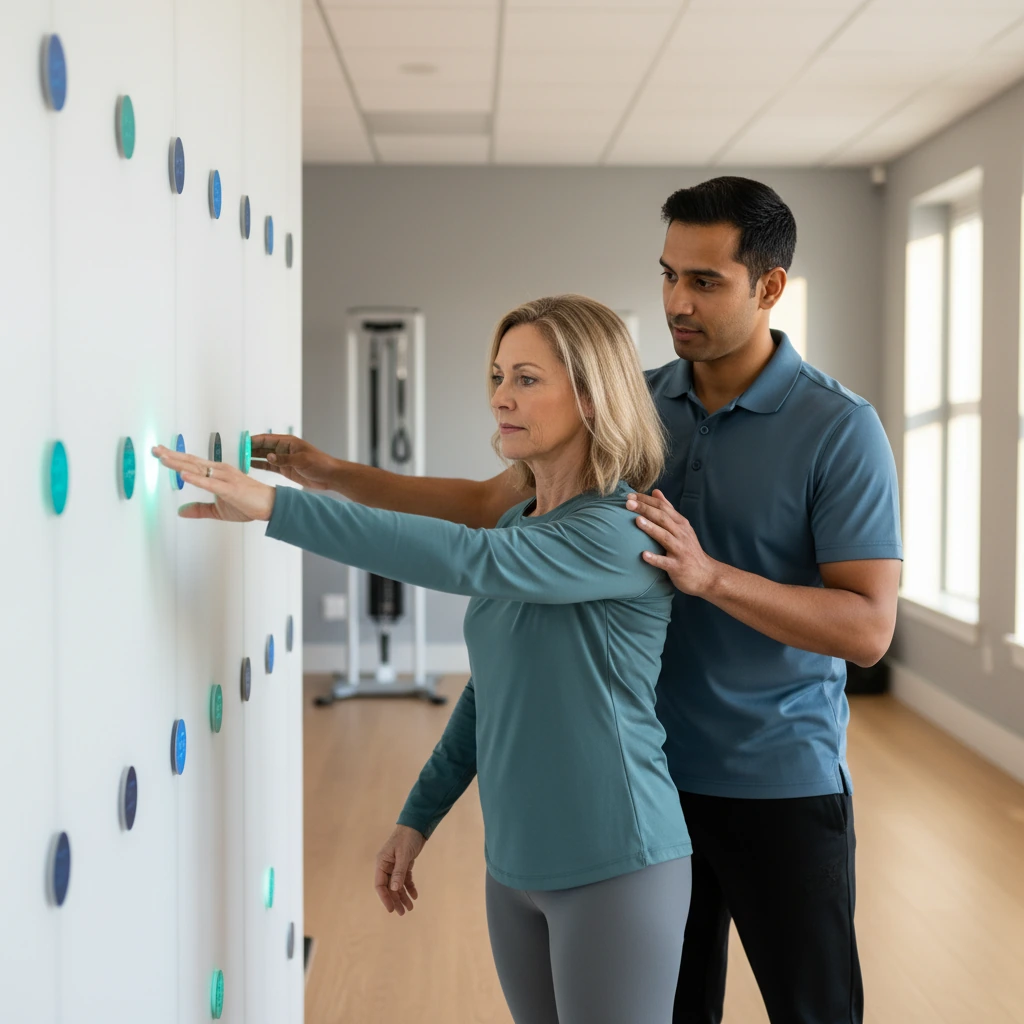
From Simple Cues to Fast Reactive Movement
The challenge is scaled to the patient. We usually build from predictable patterns toward faster, more reactive tasks as control improves.
Baseline Reaction and Movement Control
We start with simple visual cues and stable positions to assess speed, accuracy, and movement quality without overwhelming the patient.
Add Direction Changes and Multi-Step Tasks
As the basics improve, drills become more dynamic with stepping, reaching, turning, or more complex response rules.
Layer in Balance and Cognitive Load
Foam surfaces, single-leg tasks, sequencing, memory, and divided-attention drills raise the real-world demand of the activity.
Transfer to Sport or Functional Tasks
Later drills mimic the speed, unpredictability, and movement decisions that matter for sport, gait confidence, and return to activity.
The Practical Benefits of Reactive Light Training
Faster Reactions
Patients learn to respond more quickly to external cues instead of hesitating or overthinking every movement.
Sharper Coordination
Visual input, timing, footwork, hand speed, and body position become more connected and efficient through repetition.
More Engaging Rehab
Interactive targets often keep patients more invested, which helps maintain effort and makes harder drills feel more achievable.
Common Questions About BlazePod Training
Is BlazePod only for athletes?
No. Athletes benefit from it, but so do balance patients, neurological rehab patients, and anyone who needs better movement under visual or cognitive demand.
What makes BlazePod different from regular balance drills?
Regular drills can improve control, but BlazePod adds timing, unpredictability, and external cueing. That makes the task more reactive and often more transferable to sport and real-world function.
Can BlazePod be used in neurological rehab?
Yes. It is especially useful when coordination, attention, visual tracking, and movement timing need to be trained together rather than as separate silos.
Do BlazePod drills replace strength work and hands-on care?
No. They complement the rest of the rehab plan. We use them to raise the functional challenge after the patient has built the mobility, strength, and control required for that next step.